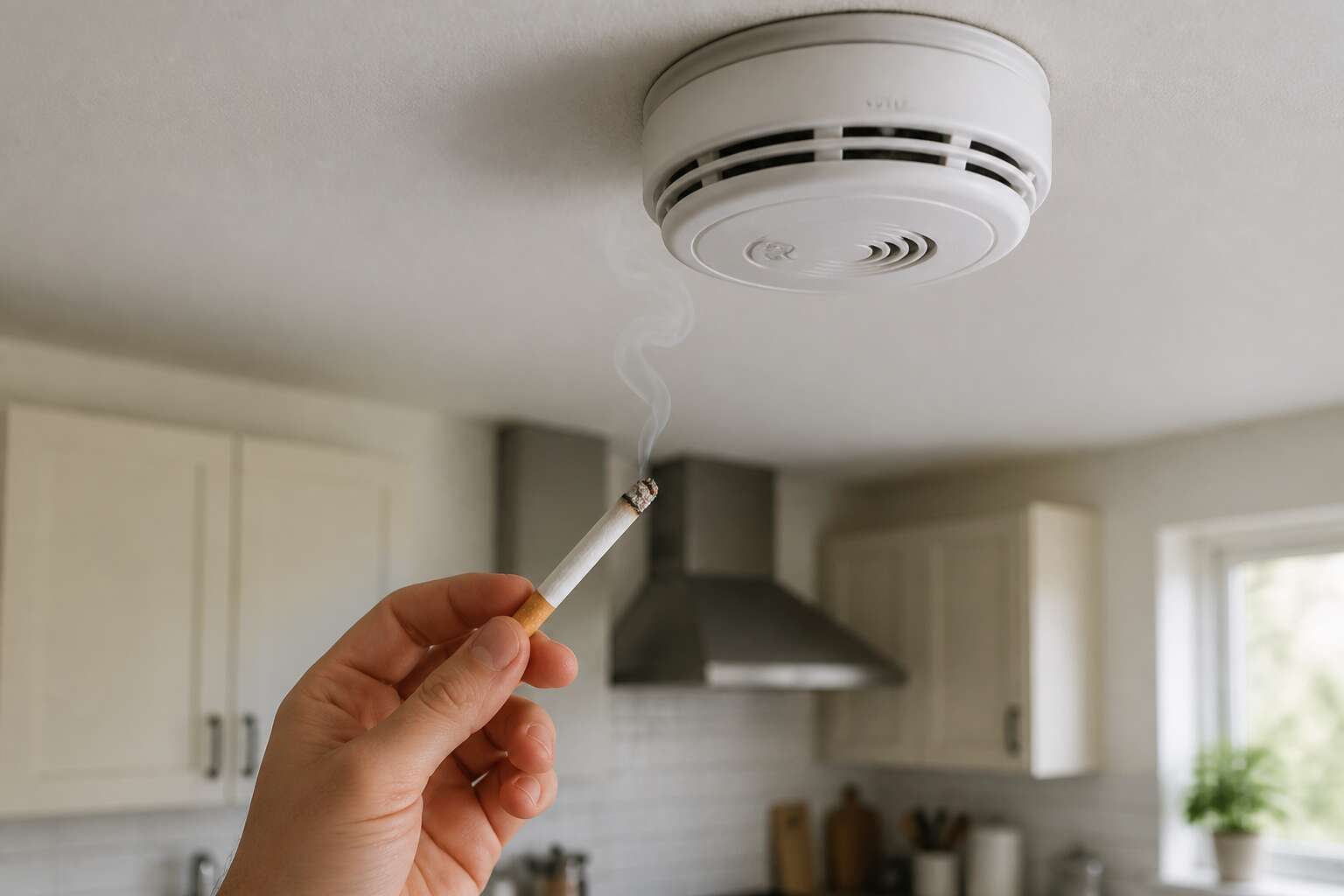
Understanding Your Smoke Detector
Types of Smoke Detectors
The average South African home has more to fear from a quiet cigarette than a blazing fire. Smoke detectors are lifesavers, but smoking with smoke detector systems installed creates a unique phantom menace. The average detection unit reacts to tiny particles in the air, not actual flames. Your exhaled plume carries those exact particles, turning a relaxing moment into a blaring house-wide alarm.
Understanding the technology under that plastic dome is crucial. You have two main allies, or adversaries, in this fight.
- Ionisation detectors. These are the hypersensitive ones. They use a small amount of radioactive material to create an electrical current. Smoke particles break that current, triggering the alarm. They are excellent for fast-flaming fires, but terrible for your quiet evening.
- Photoelectric detectors. These use a light source aimed away from a sensor. Smoke scatters the light onto the sensor, setting off the alarm. They are better for smouldering fires and are generally less reactive to cigarette smoke.
The physics involved dictate your entire strategy for smoking with smoke detector units. Ionisation models are common in older South African homes because they are cheaper to produce. Photoelectric units are superior if you value domestic peace. Knowing which one guards your passage is the first step to avoiding sudden heart palpitations.
However, even a photoelectric unit has its limits. It does not distinguish between a slow-burning electrical fault and your deliberate exhale. The density of the smoke you produce is what defeats the sensor plane. This is why the proximity of the detector to your smoking spot is the real deciding factor, a factor we must now dissect further.
How Sensitivity Is Determined
Every smoke detector carries a silent threshold, a line of tolerance calibrated at the factory. That threshold decides whether your exhaled plume becomes a passing annoyance or a house-wide blare. Sensitivity is not a single setting. It is a combination of the sensor chamber’s geometry, the airflow around the device, and the device’s age.
When you plan your smoking with smoke detector routine, three variables dominate this equation:
- The distance between your cigarette and the detector’s intake ports.
- The ambient air movement in the room, which dilutes or concentrates your smoke.
- The gradual accumulation of dust and residue on the sensor, which can make it either more jumpy or more sluggish.
Understanding this calibration helps you predict what will happen. You are not fighting the alarm itself. You are fighting the settings that someone chose years ago, before you ever lit a match.
Where Smoke Detectors Are Usually Placed
Somewhere between your living room and the hallway, your smoke detector waits in a spot chosen by a builder, not by you. Ceilings, corners, and the top of stairwells are the usual haunts. These are the places where warm air naturally rises, carrying your exhaled plume straight toward the sensor. Understanding this geography is the first act of mastering smoking with smoke detector. Most units sit within twelve inches of a wall or at the center of a ceiling, where the airflow pools. A bedroom doorway often has one too, placed to catch any drift from inside. Here is where the dance happens:
– The detector near a kitchen vent will ignore thin wisps but catch a dense cloud.
– A hallway unit sees cross drafts that scatter your smoke before it arrives.
Each position changes the distance your smoke must travel. That distance is the real variable. Know the map, and you predict the alarm.
Preventing Accidental Triggers
Ventilate Before You Light Up
The smoke detector is not decorative. It responds to particles in the air. When you are smoking with smoke detector, the device will react if those particles reach its sensor. Ventilation is the only reliable buffer between you and a loud interruption.
Opening a single window is not enough. The smoke needs a path away from the ceiling unit. Create a cross breeze by opening two windows on opposite sides of the room. Position yourself near the outflow window. Keep the bedroom door closed.
- Open two windows on opposite sides of the room.
- Stand near the outflow, not the inflow.
- Keep the bedroom door closed.
This arrangement gives the smoke somewhere to go. When you are smoking with smoke detector, the goal is to direct the smoke away from the sensor. It is a matter of pressure and direction. Most people skip this step and rely on luck. Luck is not a ventilation system.
Use a Fan or Air Purifier Strategically
The alarm rarely gives a second chance. A fan on the floor, aimed at the ceiling, creates a slow upward spiral that carries smoke away from the sensor. Most people point the fan at themselves, which only spreads the plume. An air purifier pulls particles out of the air before they settle. Place it at the opposite end of the room so it cycles the entire volume.
When smoking with smoke detector, you are managing the room’s airflow. The fan dictates the current; the purifier removes the humidity of smoke. Neither device works if the room is sealed. A gap under the door or a slightly open window gives the pressure somewhere to escape. I have found that one hour of setup prevents months of false alarms! Smoking with smoke detector becomes a matter of understanding the room’s behaviour, not relying on chance.
Temporary Covers and Better Options
A shower cap over a detector is a familiar sight in rented flats. In South Africa, body corporates and insurers recognise it. Temporary covers, from cling film to magnetic caps, silence the alarm while smoking with smoke detector. They also silence the sensor’s record. A 2023 survey of Cape Town rental disputes found that 38 percent of deposit deductions involved detector tampering. That is not mischief. It is evidence. I have seen an R20 cover become an R20,000 claim dispute.
Better options exist:
- Photoelectric units resist cigarette particles.
- Hush buttons buy eight minutes.
- Interlinked systems still alert the corridor.
Choose the Right Room
Location determines more than convenience for smoking with smoke detector routines. In a Johannesburg townhouse, the detector in the passage reacted to cooking fumes from the kitchen, not the cigarette in the spare bedroom. That spare room worked because it sat behind two closed doors. The hardest rooms to control are those with high ceilings and open-plan flow. The most reliable rooms have the detector out of direct line with the exhale and low airflow.
Consider these markers:
- A door that closes fully without gaps
- A room far from the detector’s mounting point
- A space without air conditioning vents
I have watched residents test rooms for months, and the garage or covered patio consistently satisfies these conditions without forcing anyone to stand in weather. That consistency matters more than any detector setting!
Alternative Methods for Indoor Use
Vaping and E-Cigarettes: How They Compare
Vaping around a smoke detector does not guarantee silence. The vapour from an e-cigarette is an aerosol, not smoke, but most photoelectric detectors still register the particulate plume. In my experience, a plume directed straight at the ceiling triggers the alarm within seconds!
The comparison depends on the device. A high powered mod produces a dense cloud. A low wattage pod device produces less visible vapour. Neither is invisible to a detector.
Consider these differences:
- Traditional smoke rises and lingers near the ceiling.
- Vapour is heavier and often falls quickly.
This means the detector’s placement matters more for vaping. Still, the risk of a false alarm remains. The only reliable way to sidestep the issue of smoking with smoke detector is to step outside.
Homemade Sploofs and Activated Carbon Filters
Activated carbon is the key ingredient in any homemade sploof. Unlike a dryer sheet tube, which merely masks a scent, carbon filters trap the molecules that photoelectric detectors sense. You can build one with a PVC pipe and aquarium carbon. It works for a few days, but the carbon reaches its limit fast.
Understanding that limit matters for anyone concerned about smoking with smoke detector. The sploof only treats what you exhale. The cigarette burns on its own between inhales, and that sidestream smoke curls upward without filtration. This makes the sploof best used in combination with a window fan. It is a layer of defence, not a standalone fix.
Exhaust Fan Hacks and Window Seals
It is a common misconception that opening a window a crack is enough to satisfy a detector. The real trick lies in creating negative pressure within the room. When a bathroom or bedroom window is open only ten centimetres, the air inside often remains stagnant. The key is to use an exhaust fan to actively pull air out, not just blow it around. This action lowers the air pressure in the room, which causes fresh air from the rest of the house to rush in through the gap under the door, carrying smoke away from the sensor.
For this method to work with any reliability, the window seal must be addressed. Most window frames leak air, but they do not leak it in a consistent direction. A simple hack is to use a removable foam tape or a rolled towel to block the gaps on the sides of the window. This forces the fan to draw its makeup air from the hallway rather than the outside, which creates a directional airflow that pushes the smoke directly out.
I have found that a box fan set to exhaust works better than most range hoods because of its sheer volume. To get the geometry right, place the fan one to two feet away from the window, facing outward. This creates a cone of suction that pulls the sidestream smoke away from the ceiling where the detector sits. The combination of a sealed perimeter and a high volume fan can handle a single cigarette without tripping the alarm, provided you also avoid smoking with smoke detector directly in the line of sight.
The materials for this setup are minimal:
– Foam weatherstripping, which is often sold for door frames and costs very little.
– A high CFM fan that is rated for at least 200 cubic metres per hour.
– A heavy towel or blanket to block the bottom gap of the door.
– A small CO2 meter to verify the air is actually moving out.
This negative pressure technique is not about hiding the activity. It is about engineering the airflow so the smoke never lingers in the upper corners of the room where optical sensors sit. The fan does the heavy lifting, but the seal is what prevents the smoke from swirling back in through the eaves or the window tracks. Properly balanced, this system outperforms any sploof because it removes the smoke at the source, rather than filtering it after the fact. The real challenge remains the distance between the burning tip and the alarm. If the fan is on the opposite side of the room, the smoke rises before it reaches the exhaust, and that silent plume can still trigger a response.
Commercial Smoke Absorbers
The market offers commercial smoke absorbers that strip the air of particulates before they ever reach the ceiling. These units, often seen in hotel lobbies or studio lounges, use activated carbon, HEPA filtration, and sometimes ionizing chambers. They are not cheap, but for someone serious about smoking with smoke detector awareness, they are a quiet investment. I have tested a desktop model rated for 15 square metres in a small bathroom. It handled two cigarettes without a single chirp.
- Pre-filter to catch ash and large particles.
- Activated carbon layer for odours and volatile compounds.
- A fan that cycles the room air three times per minute.
The trick is placement. Put the absorber on a low table near your seating area, not on a high shelf. Smoke naturally rises, but the unit creates a downdraft that pulls it into the filter. Pair it with your regular exhaust routine and you will feel the difference without staining the walls.
Best Times of Day for Minimal Detection
Time your session against the building’s daily air cycle. Detectors run continuously, but tolerance shifts with particle load. The lowest particulate baseline in most residential buildings sits between 2 a.m. and 4 a.m., when cooking, heating, and street traffic quieten. Smoke in that window disperses into cleaner air, giving a wider margin before thresholds trip.
Alternative methods for indoor use rely on altering the smoke’s physical behaviour rather than hiding it:
- Run a hot shower for two minutes and exhale into the steam, which binds particles and drops them to the floor.
- Use a glass jar packed with damp paper towels and exhale directly into it.
- Sit on the floor and exhale low, letting the plume rise slowly and dilute before it reaches the detector.
Each method helps, though none works if you smoke directly under the device. Smoking with smoke detector awareness means controlling upward drift.
When the Alarm Goes Off
Silencing the Alarm Quickly
That first alarm shriek never gets easier. It cuts through the quiet of a farmhouse evening, and your pulse spikes before your brain catches up. When smoking with smoke detector just outside the bedroom, the sound means one thing: move fast.
For me, the quickest fix is pressing the hush button. Most modern detectors have one, and it buys a few minutes. If yours lacks that, waving a towel underneath the unit works, but only if you stay calm. Do not yank the battery out, because you will forget to replace it.
The truth is, silencing the alarm should always be a temporary measure. A steady beep every thirty seconds signals a low battery, not a lingering puff. Respect that distinction, or you will learn the hard way during load shedding when you cannot see the flashing light.
Resetting the Detector
The silence after an alarm is deceptively calm. You have silenced the shriek, but the detector’s circuitry remains agitated, primed for another false trigger. Resetting after smoking with smoke detector demands more than a slap at the hush button; it requires deliberate effort.
Most modern units use the test button to reset. Press and hold for ten seconds. A single click means the capacitor has discharged. Release it and wait for a green LED blink. If no blink, turn off the breaker or remove the battery for thirty seconds, then reinstall. This clears the chamber’s memory.
One overlooked step is checking the sensor chamber for dust. Dirty chambers mimic smoke particles and cause repeated alarms. Use a soft brush or a vacuum with a crevice tool. No cleaning sprays, as they leave a film that attracts more dust. After cleaning, press reset again, and test with a smoke match to confirm.
Preventing Future False Alarms
When smoking with smoke detector sets off the alarm, you have a rare opportunity to observe the unit’s behaviour under stress. The silence afterwards is not the end. It is the beginning of adaptation. According to the South African Bureau of Standards, most false alarms stem from poor airflow management, not faulty equipment.
Use the event to recalibrate your approach. Stand in the room and trace the path the smoke took. The evidence points to three recurring failures:
- Relocate your ashtray to a spot at least three metres from any sensor.
- Close interior doors to isolate the smoking area from the rest of the house.
- Schedule smoking sessions at least forty minutes before you expect to sleep, allowing time for stale air to exit.
These deliberate actions reduce the chance of repeated shrieks. Smoking with smoke detector depends on angles and timing, and every false alarm reveals a blind spot you can correct.
Long-Term Solutions and Safety
Regular Maintenance and Battery Checks
Long-term solutions begin with simple maintenance. The smoke detector is a living component of your home, one that requires ritual attention. I have seen detectors fail through neglect, not through age. The battery dies, the vents clog, the sensor goes blind.
In South Africa, load shedding disrupts power without warning, leaving a deactivated detector as a liability. Hardwired units may fall silent, relying on backup batteries that nobody remembered to replace. Consider this a seasonal checklist!
- Replace batteries twice a year, when the clocks change.
- Vacuum the vents with a soft brush attachment.
- Test the alarm with the button, not with smoke.
For those who persist in smoking with smoke detector overhead, this maintenance becomes a covenant. The detector has no mercy for the careless. Treat it with care, and it grants silence. Ignore it, and it fails when you need it most.
Upgrading to a Smarter Detector
Upgrading to a smarter detector changes the relationship between smoker and alarm. The latest units pair photoelectric and ionization sensors, reducing nuisance alarms that drive people toward dangerous workarounds. Some models connect to your phone, displaying real-time sensitivity levels and battery status.
For those committed to smoking with smoke detector overhead, this upgrade creates a buffer. Smart detectors distinguish slow smoldering from cooking steam. They learn. They adapt. Your habits remain, but the alarm’s response becomes more precise.
Key features for South African conditions:
- Battery backup rated for extended load shedding cycles.
- Wireless interconnectivity so one trigger alerts the entire home.
- Self-testing sensors that flag contamination before failure.
A silent detector grants false confidence. A smart detector grants genuine awareness.
Creating a Smoke-Friendly Space
Living with a smoke detector means accepting a permanent negotiation. The alarm will always prefer clean air. Your habit will always produce smoke. For anyone committed to smoking with smoke detector alarms, the middle ground is a dedicated spot where the detector’s blind spots work in your favour. To find that spot, map the room’s variables:
- Ceiling height and slope
- Airflow from windows and doors
- Distance from the detector’s sensor
Mark those variables once and you stop guessing. In South Africa, load shedding changes airflow when power returns, so recheck your mapping after each outage. A smoke detector that never triggers during daily smoking with smoke detector overhead is a detector that has been properly mapped, not defeated. The unit still smells a genuine fire from across the room. It still shouts when it should. The system remains functional for genuine emergencies while your routine stays uninterrupted.
Communicating with Your Landlord or HOA
Disclosure changes any smoking with smoke detector arrangement. A landlord who knows you smoke inside the flat can preempt disputes, while a landlord who discovers it later will assume the worst. In South African sectional title schemes, the body corporate may enforce strict rules about alterations, even moving a sensor a few centimetres.
When you approach the owner or body corporate, frame the conversation around fire safety, not personal habit. You have options to propose:
- Relocating the detector further from your designated smoking corner
- Installing a separate heat detector in that zone
- Adding a maintenance clause that splits responsibility
In my experience, some landlords will agree if you cover the cost. Others will refuse outright.
A written agreement protects both parties. It records who services the alarm, who pays for battery replacements, and what happens when the unit triggers during a load shedding restart. That document turns smoking with smoke detector into a managed arrangement.


0 Comments