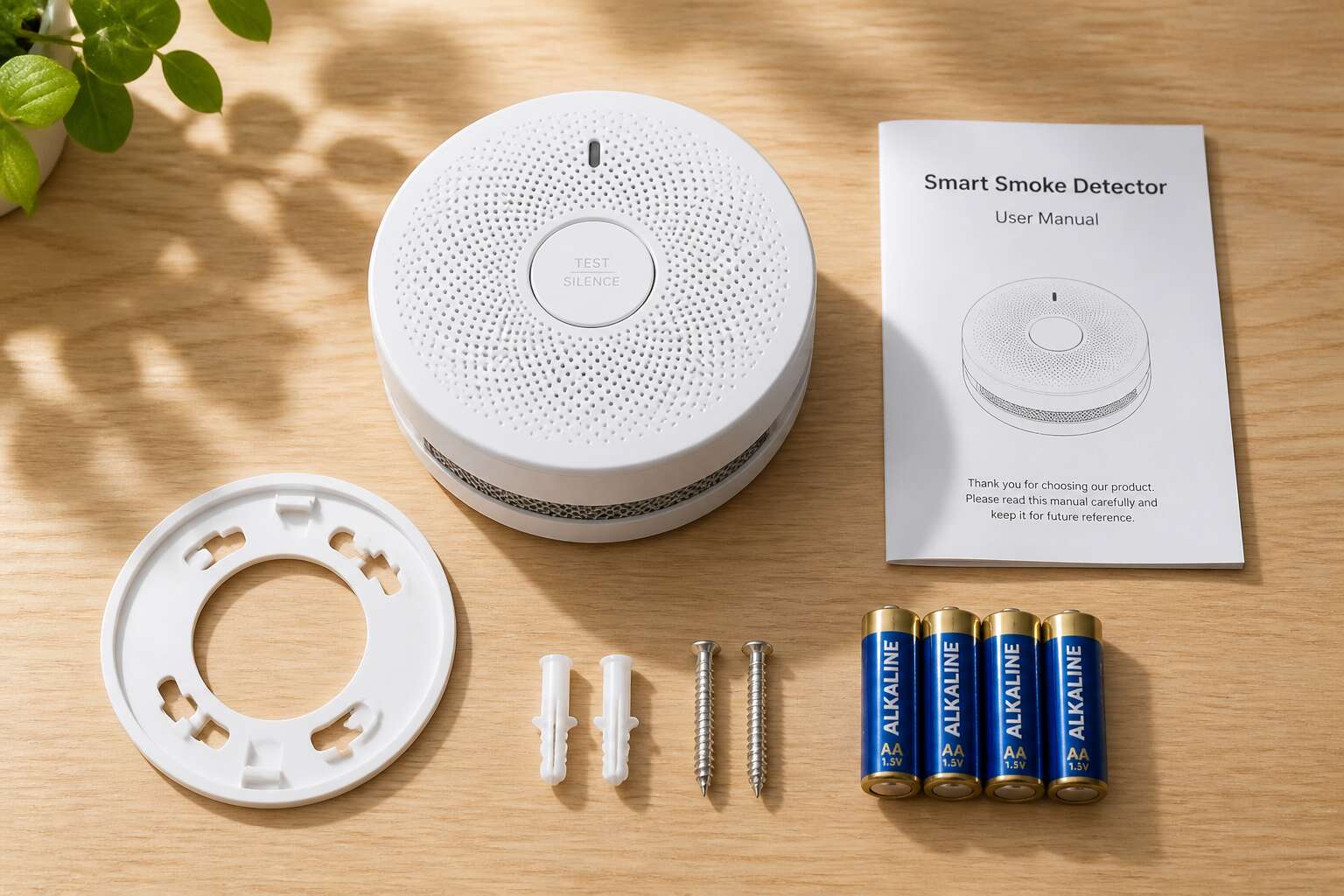
Understanding Fire Safety Essentials
Types of Fire Detection Devices
Fire moves faster than the eye can follow. In South Africa, the minutes between ignition and awareness can mean the difference between escape and tragedy. Understanding fire safety essentials starts with recognising how different detection devices respond to distinct threats.
Photoelectric sensors catch smouldering fires, while ionisation types react to fast-flaming blazes. A quality smoke detector kit often combines both technologies, offering layered coverage. Here are the core detection categories!
- Photoelectric alarms for slow-burning fires
- Ionisation alarms for rapid flame development
- Combined units for dual response
Photoelectric alarms excel at detecting smouldering upholstery fires, while ionisation alarms respond faster to clean-burning flames.
How Smoke Alarms Work
The South African National Fire Protection Association reports that most fatal fires occur between midnight and dawn. A person deep in REM sleep cannot smell smoke, so the alarm must be loud enough to break through consciousness.
A smoke detector kit relies on a piezoelectric horn producing an 85 decibel chirp. Closed doors, thick walls, and a running ceiling fan can absorb that sound. The ceiling fan is particularly unhelpful. Installation guides advise fitting units in every hallway and bedroom, not just the kitchen.
- Sound pressure drops by six decibels for every doubling of distance.
- Drywall absorbs high frequencies more than low ones.
- Humidity can alter the sensor’s sensitivity.
The circuit inside uses a low voltage current and a small battery. When smoke enters the sensing chamber, the current changes and the horn fires. The entire reaction takes less than three seconds. A functional smoke detector kit compresses that time into a warning you can actually hear.
Key Features to Look For
South Africa’s scheduled power cuts mean the grid is the least reliable part of a home. A smoke detector kit that depends on household electricity becomes a silent hazard when the lights go out. Battery backup is critical. Look for sealed lithium cells rated for ten years over disposable alkaline options.
The SANS 10139 standard governs residential fire detection in South Africa. Any smoke detector kit you consider should carry the SABS mark. Beyond certification, practical features decide whether the device protects your family:
- A hush button silences nuisance alarms without disabling the detector.
- Interconnected units in multiple bedrooms trigger all alarms when one detects smoke.
- A test button checks the sensor and horn without exposing you to smoke.
Sound output, humidity compensation, and battery life indicators separate a reliable kit from a decorative one. The selection process is about matching the device to how your household lives.
Placement Best Practices
The deadliest household fires in South Africa often strike between midnight and 4am, while families sleep through the first signs of smoke. Placement decides whether a smoke detector kit provides real protection.
Mount the unit on the ceiling, near the centre of the room. Smoke rises and gathers long before it reaches a wall. Keep the device at least one metre from doors and windows, where draughts push smoke out of reach.
Practical placement follows daily life:
- One unit in the passage outside every bedroom
- One in each room where the door stays closed at night
- One in the main living area, away from the kitchen
The same setup fails when mounted behind curtains or above high shelves. Homes with open-plan layouts need extra units because smoke travels further before being detected. Place alarms where sound carries, not where the ceiling looks neatest.
Choosing the Right Alarm Package
Wired vs. Battery-Powered Options
A house fire gives you no second chances, and the alarm package you choose decides whether you wake up at all. For South African households grappling with load shedding, the wired versus battery debate gains new weight. A hardwired system connects to your electrical grid, but a battery powered unit keeps watching when the lights go out.
Consider these differences when selecting an alarm package:
- Wired alarms require professional installation and remain unaffected by battery depletion, yet they fail during power cuts without a backup.
- Battery models offer simple DIY setup and uninterrupted function during outages, though you must replace cells regularly.
I have seen families trust a single smoke detector kit for years, forgetting that batteries drain silently. Your choice should reflect your daily reality, not just convenience.
Smart Home Integration
When load shedding cuts your Wi-Fi, a smart smoke detector kit offers nothing unless it has local alerts. I have watched homeowners trust app notifications, only to discover the router died long before the smoke appeared.
Smart home integration means more than remote warnings. A capable kit can trigger smart lights, unlock doors, or shut down HVAC systems. Consider what your setup needs:
- Does the unit support a local siren and cellular backup?
- Can it link to your existing smart hub or standalone app?
- Will it tell the difference between cooking smoke and a real fire?
Each additional feature matters, but only if it holds up during outages. A smoke detector kit that depends on cloud connectivity alone will fail you during a blackout, leaving your family unprotected.
Sensor Technology Comparisons
I have seen a photoelectric sensor miss a fast-flaming fire until it was too late. Ionization sensors react fastest to fast-flaming fires. Photoelectric sensors catch slow smouldering smoke earlier. A dual sensor smoke detector kit covers both scenarios, though it costs more and needs careful placement to avoid nuisance alarms. Your home’s layout and wiring point to the right choice!
- An open plan kitchen with gas burners may trigger photoelectric sensors from cooking steam.
- A home with older wiring needs ionization sensitivity for rapid flare ups.
Quality smoke detector kits now pair sensors with a thermal heat detector. The thermal element ignores smoke and responds only to temperature spikes. Compare response curves before you buy. The spec sheet tells you which sensor leads the alarm. That matters most during the first two minutes of a fire.
Evaluating Sensitivity and Response Time
Response time is the metric that separates an early warning from a lost property. In South African homes, a fire doubles in size every minute, yet many alarm packages ship with factory default sensitivity. When you evaluate a smoke detector kit, look at the response curve, not the marketing claims.
Here’s what matters when comparing packages:
- Response time in seconds, not the sensitivity rating.
- Fixed threshold versus rate-of-rise detection.
- Test protocol matches SANS 50001.
A package with adjustable sensitivity gives you control. You can lower it for an open-plan kitchen or raise it for a bedroom. The right alarm package balances speed with false alarm resistance. I’ve seen too many homeowners settle for a generic setup. A smoke detector kit that lets you tailor the response to your home’s actual conditions makes the difference.
Brand Reliability and Certifications
The SABS mark on a smoke detector kit is the only real proof it will wake you up. In South Africa, SANS 50001 compliance is not a marketing accessory; it is a set of physical tests for heat, humidity, and battery endurance. Cheap imports often skip these tests and fail exactly when you need them most!
I have watched off-brand units corrode internally within a year. A reliable manufacturer prints a traceable serial number and gives you a local warranty. Look for a distributor with a physical service centre, not just a courier drop-off point.
- SANS 50001 for fire detection response.
- SABS approval for electrical safety.
- ICASA compliance for wireless models.
Reliability extends beyond the sensor. A certified brand publishes its testing protocols and sells replacement parts for a decade. A quality smoke detector kit carries a date of manufacture on the decal, so you know its exact lifespan. The brand that stands behind its certificate is the one you trust, not the one that merely sells the casing.
Installation and Maintenance Guide
Tools Required for Setup
I have patched more holes in ceilings than I care to admit, all from sloppy mounting attempts. A smoke detector kit does not demand advanced carpentry, merely a modest tool collection. You will need:
- An electric drill with a masonry bit for brick or concrete
- A screwdriver, preferably magnetic tipped
- A stable ladder, not the leaning kind
- A stud finder, to avoid drilling into a steel beam
- A pencil for marking the bracket
That is the entire arsenal. Mounting takes under thirty minutes. Maintenance is the part homeowners overlook. Dust settles into sensor vents and weakens performance. Bathroom humidity triggers false alarms. Test each unit monthly and vacuum the exterior. Replace batteries before they chirp at 2 AM. In South Africa, loadshedding makes battery backup essential, so confirm the backup holds after every outage. A smoke detector kit is only as useful as the attention you give it, and an ignored smoke detector kit is just ceiling decor.
Step-by-Step Mounting Instructions
Nearly 60% of residential fire deaths occur in homes without working alarms. The mounting process is simple when you follow the order correctly.
- Mark the bracket position with a pencil.
- Drill pilot holes with a masonry bit for brick or concrete.
- Screw the bracket into the ceiling.
- Twist the detector head until it clicks.
That click confirms a properly seated smoke detector kit. Check alignment by pulling the unit straight off and reattaching it. If it wobbles, loosen the bracket screw and adjust. The full install takes under thirty minutes.
Once mounted, maintenance determines performance. A smoke detector kit loses sensitivity as dust gathers in the sensor vents. Vacuum the exterior monthly and test the alarm weekly. After loadshedding, verify the battery backup still holds; Eskom outages drain reserve power. Bathroom humidity triggers false alarms, so keep units at least three meters from showers.
Connecting Multiple Units
In rural South Africa, a single smoke detector kit rarely covers a sprawling farmhouse. When connecting multiple units, you must decide between wireless interlink and hardwired networks. The process starts with reading each manufacturer’s protocol.
First, confirm the main unit’s compatibility. Then follow these steps:
- Position each detector within the specified radio range.
- Press the pairing button on the primary unit, then the secondary units.
- Wait for the beep that confirms synchronization.
Test every connection weekly by pressing the test button on one alarm. All others should sound within seconds. If they don’t, move the units closer or check for interference from metal roofs. Loadshedding can disrupt battery memory, so reset the network after power returns.
A properly connected smoke detector kit turns a scattered house into a single warning system. That peace of mind matters when the nearest fire station is forty minutes away.
Testing and Troubleshooting
Testing a smoke detector kit in rural South Africa is less a chore and more a ritual. Press the test button monthly, but do not expect a polite beep. Expect a screech that makes the dogs howl. That screech means the circuit works. If you get silence, check the battery first. Load shedding plays havoc with battery memory, so a reset after power returns is often the fix.
For troubleshooting, work through the mundane possibilities before blaming the unit:
- Dust buildup inside the sensor chamber
- Corroded terminals from humidity
- Age beyond the ten year lifespan
Each issue has a known remedy. A vacuum nozzle clears dust. Terminals clean with a dry cloth. Old units need replacement, not repair. The smoke detector kit will not announce its ailment. You have to ask the right questions, and your nose will not help.
Battery Replacement Schedule
The smoke detector kit runs on a battery, and that battery has a lifespan. South Africans know that Eskom’s load shedding cycle drains batteries faster than the printed expiry date suggests. A fresh battery twice a year, tied to the equinoxes or the first cold front, prevents most silent failures.
Replacement follows a practical order:
- Twist the unit counterclockwise to release it from the mounting bracket.
- Press the test button for five seconds to drain residual charge.
- Slide out the old battery and inspect the terminals for corrosion.
- Insert a fresh 9V or AA battery, matching the polarity markings.
- Reattach the unit and press the test button until the screech confirms life.
Municipal drop-off points accept spent batteries, so there is no excuse for cramming them into the rubbish bin. A smoke detector kit with a fresh battery stays silent; the tired one chirps at midnight.
Enhancing Home Safety with Additional Components
Carbon Monoxide Detection
Carbon monoxide is tasteless, odourless, and colourless, and South African winters push many households toward gas heaters and paraffin stoves. A smoke detector kit reacts to smoke and heat, but it does not measure this gas. That gap deserves attention before the first cold front arrives.
Adding a separate CO sensor is a direct answer. In our homes, common sources include:
- Indoor braais using charcoal
- Gas water heaters in confined spaces
- Portable generators placed near windows
When choosing a smoke detector kit, I encourage you to look for an integrated carbon monoxide module or buy a companion alarm linked to the same wiring. The two devices operate together, sensing flame and gas respectively. You sleep better!
Heat Sensors and Rate-of-Rise Detectors
A smoke detector kit detects smoke and flame, but not every fire announces itself with visible warnings. Some smoulder in hidden cavities. Others erupt without preamble. Heat sensors and rate-of-rise detectors track these quieter threats.
Heat sensors trigger when ambient temperatures cross a fixed threshold. Rate-of-rise detectors respond to sudden spikes in warmth, catching fires that generate little smoke. Electrical faults in ceiling voids or overloaded wall sockets in older Johannesburg homes often produce exactly this signature.
Consider where these add value:
- Kitchens, where cooking smoke triggers false alarms
- Garages, where dust and fumes interfere with optical sensors
- Roof spaces, where fires creep unseen for hours
I have seen a smoke detector kit with heat components catch a smouldering towel before visible flames appeared. The heat rose half a degree per minute. The rate-of-rise detector noticed. That is the difference between a repaired wall and a rebuilt home!
Interconnected Alarms for Whole-Home Coverage
A fire in a ceiling cavity can burn for twenty minutes before a single alarm sounds. A smoke detector kit protects the room where it is installed, not the whole house. That distinction matters when the fire starts in the garage or the far end of the passage. Interconnected alarms change that. When one unit detects trouble, every alarm in the network sounds, giving you time to act from anywhere on the property.
For older Johannesburg homes, whole-home coverage often means retrofitting. Look for a smoke detector kit that supports additional units and optional components. You can extend coverage sensibly:
– Add a strobe light for family members who are hearing impaired
– Install relay modules to trigger a security system or shut down ventilation
– Place extra base units in outbuildings or staff quarters
The alarm should alert people wherever they are. A single detector is better than none. A full network removes the uncertainty from family safety.
Accessories and Monitoring Services
Most homeowners install a single smoke detector kit and stop there. That smoke detector kit protects one room, not the full property. Additional components make the difference.
Consider what a professional installer would add:
- An emergency light that switches on when the alarm sounds
- A key fob for silencing false alarms without climbing to the ceiling
- A relay module that unlocks gates and doors during an evacuation
These accessories work alongside the core units. Monitoring services take things further. For a monthly fee, a central station watches your system around the clock. If the alarm triggers while you are on holiday or asleep, operators verify the signal and dispatch responders immediately.
For Johannesburg homeowners, cellular backup is worth the extra cost. Load shedding can knock out WiFi routers, which disables many smart systems. A dedicated cellular communicator ensures the monitoring connection stays live, and I always recommend this addition for local homes.
Legal and Insurance Considerations
Building Code Requirements
In South Africa, the National Building Regulations govern every new dwelling, and a smoke detector kit is legally required. SANS 10139 specifies placement, often mandating units on every sleeping floor. Insurance policies add another layer. After a fire, an assessor may request proof of compliant detectors. Without this proof, a payout could be reduced or denied.
Consider these compliance points:
- Verify the unit carries SABS marking.
- Confirm it meets local municipal bylaws.
- Retain installation certificates for your records.
These requirements separate protection from liability. Choosing a compliant system keeps you safe from legal claims.
Landlord and Renter Responsibilities
One missed smoke detector kit can turn a lease renewal into a courtroom saga! South Africa’s Rental Housing Act stays silent on fire safety, leaving municipal bylaws and common law to fill the gap. Landlords owe tenants a habitable dwelling, and that duty includes working detection equipment.
Tenants carry their own obligations. A renter who disconnects a unit or ignores a low battery warning assumes responsibility for any resulting damage. Insurance assessors scrutinise compliance before releasing funds. A claim can fail entirely if the property lacked an approved smoke detector kit at the moment of the fire.
- Landlords must install, document, and maintain the smoke detector kit.
- Tenants must test units monthly and report faults in writing.
Neither party escapes liability by pointing fingers after smoke clears. The lease should assign these duties without ambiguity.
Insurance Discounts for Advanced Systems
South African insurers pay close attention to your smoke detector kit before quoting household premiums. A basic unit satisfies minimum policy conditions, but advanced detection shifts the risk profile.
Providers often discount premiums for systems with specific features:
- Interconnected alarms covering every sleeping area
- Monitored response services that alert a central station
- Documented maintenance and testing records
The savings rarely appear as a separate line item, yet they accumulate over the policy’s lifetime. In my experience, a verified smoke detector kit has reduced annual premiums by nearly ten percent in several cases. That reduction alone justifies the investment for most homeowners.
Documentation and Inspection Logs
South African homeowners rarely consider the paper trail attached to a smoke detector kit until a claim goes sideways. The documentation becomes the silent witness. Insurers and municipal inspectors want proof, not promises. A logbook showing quarterly tests, battery replacements, and sensor cleaning dates transforms a basic smoke detector kit into verifiable evidence of diligence. Without it, a home may meet the letter of the law but fail its spirit.
Keep the inspection register where you can find it fast. Photographs of the unit with visible date stamps help, too. Some insurers request these records before payout, and a missing entry can stall the process for weeks. For landlords, the log doubles as protection against liability disputes. The paperwork itself, boring as it seems, carries more weight than the alarm’s decibel rating.



0 Comments