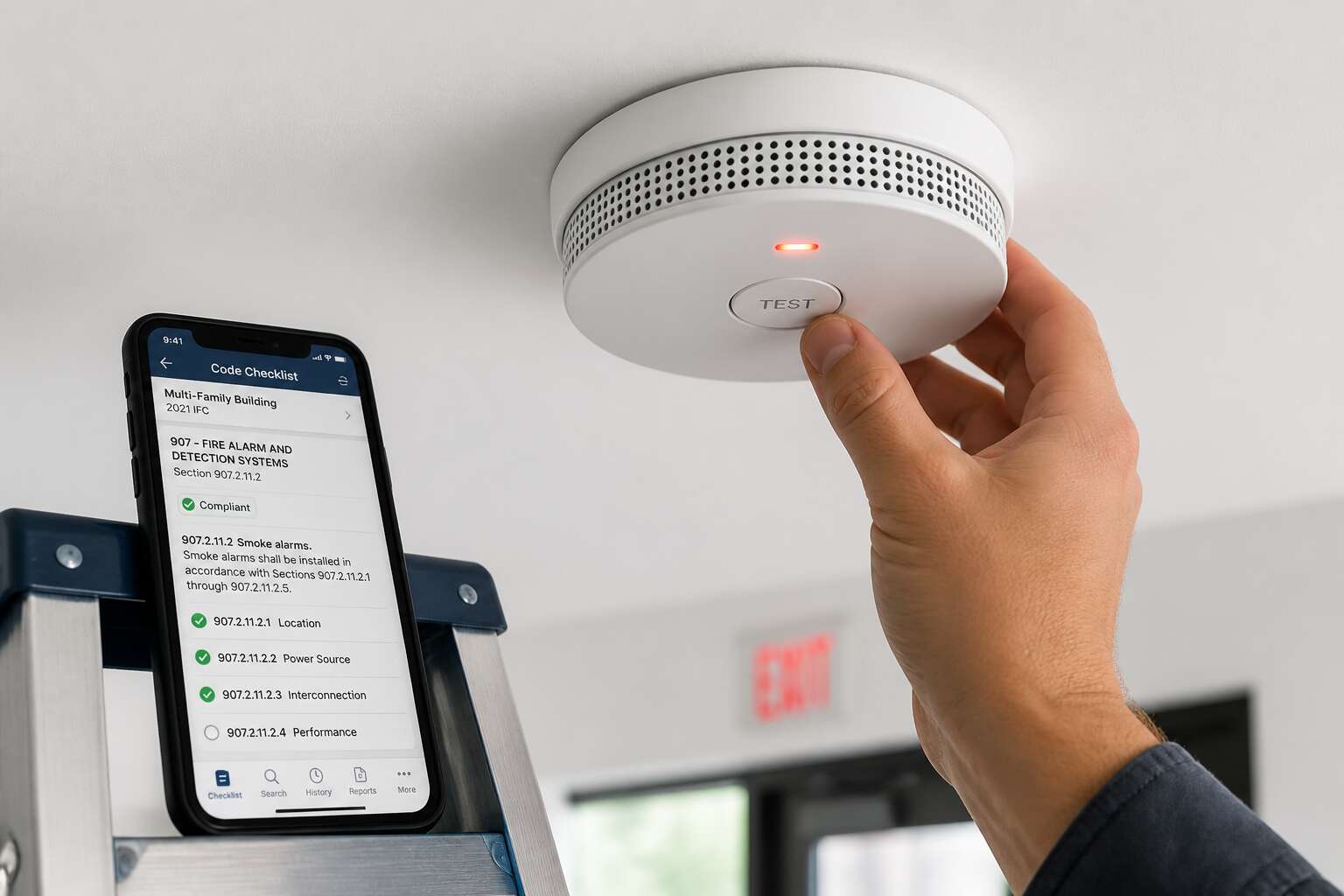
Understanding Smoke Detector Codes
What Are Smoke Detector Codes?
Every year, South African fire departments respond to thousands of residential blazes, yet most homeowners cannot read the one signal their smoke detector gives before disaster. The smoke detector code is not a spoken language; it is a pattern of beeps, chirps, and silence that tells a precise story. A single chirp every minute signals a low battery. Three consecutive beeps mean a hardwired unit has detected a fault in its wiring.
Understanding these signals lets you act instead of guess. The code breaks down into three primary categories:
- End-of-life alerts, where the detector chirps twice repeatedly to announce it has expired
- Carbon monoxide warnings, which produce four rapid beeps in a loop
- Trouble signals, marked by irregular chirping tied to dirt or humidity
In South Africa, load shedding causes voltage fluctuations, and the smoke detector code often shifts its behaviour. The unit may chirp sporadically when power returns, mimicking a low battery warning. Recognising that pattern prevents unnecessary replacements and wasted money.
Why Codes Matter for Home Safety
The smoke detector code is the only early warning system you fully control. For South African households, load shedding makes this code more volatile, which means decoding it correctly matters more than ever. A single chirp every minute signals a low battery, but voltage fluctuations can produce false patterns that mimic that same alert. Misreading the smoke detector code leads to two outcomes: needless replacements or ignored warnings. Both weaken your home’s defensive posture.
The value of learning the code lies in its economy of action. When you know exactly what each beep means, you respond with precision. You replace a battery, clean a sensor, or evacuate. No wasted time, no fatal hesitation. In a country where power interruptions are routine, this knowledge transforms a confusing noise into a clear directive. That is why the code matters: it turns ambiguous sound into decisive information.
The Difference Between Codes and Standards
Listen closely! A chirp in the dark can feel like a haunting. But to the one who hears with intent, the smoke detector code speaks in two tongues: the legal and the technical. The code itself is the law, a binding decree dictating where detectors sit and how they behave. The standard, however, is the quiet benchmark. It defines the sensor’s sensitivity, the alarm’s pitch, the battery’s endurance.
Without a standard, a smoke detector code could demand a device that exists only in theory. The standard gives substance to the decree:
– Codes are mandatory. They hold the force of law.
– Standards are benchmarks. They hold the measure of quality.
For the South African household, SANS regulations shape every unit you install. Load shedding may fray the power lines, but the smoke detector code remains resolute. It is the difference between a warning and a whisper.
National Fire Protection Association Standards
NFPA 72 and Smoke Detector Requirements
A single dead air pocket near a ceiling can silence an entire fire alarm system, no matter how strict the smoke detector code appears. NFPA 72 exists to prevent that failure. It dictates where smoke detectors go, how they connect, and when they must trigger.
In South Africa, while SANS 10139 governs domestic alarms, NFPA 72 is frequently referenced by engineers for larger commercial projects. A common mistake is assuming one smoke detector covers a whole floor. The standard disagrees. Placement depends on ceiling geometry, airflow patterns, and ambient temperature. The requirements fall into three categories:
- Spacing: detectors must sit within a certain radius of any point on the ceiling.
- Location: avoid dead air pockets near walls and corners.
- Interconnection: units must signal each other, not just sound locally.
Getting this wrong means the smoke detector code fails to deliver its intended protection. Compliance saves lives.
NFPA 101 Life Safety Code Overview
But detection is only half the equation. NFPA 101, the Life Safety Code, governs how a building protects its occupants once that alarm sounds. It sets the minimum standards for exit routes, fire barriers, and occupancy density. In South African commercial projects, engineers often pair NFPA 72 with NFPA 101 to cover both sides of the same threat.
The Life Safety Code does not replace the smoke detector code. It builds on it. Where NFPA 72 tells you where to place a sensor, NFPA 101 tells you how many people can safely use that corridor, and how quickly they must be able to evacuate. One without the other leaves a gap.
- Egress capacity and travel distance
- Compartmentation and fire resistance
- Emergency lighting and signage
This standard is referenced heavily in healthcare and high-rise design across South Africa. It forces a direct look at human behavior, not hardware alone.
How NFPA Standards Influence Local Codes
NFPA standards do not land in South Africa with the force of law. They carry something more practical: weight. Municipal authorities and SANS technical committees lean on NFPA 72 and NFPA 101 when drafting provincial regulations. So the smoke detector code in Johannesburg rarely cites NFPA by name, yet the placement rules and spacing limits match it almost line for line.
That influence shows up in several concrete ways:
– Direct adoption into municipal bylaws, often with minor local amendments.
– Adaptation through SANS, where NFPA provisions are reworded for South African conditions.
– Referenced in engineering specifications even when not legally required.
The result is a layered system. An engineer in Cape Town reads the local regs, spots a gap, and reaches for NFPA to close it. The smoke detector code on paper is never the whole story. Inspection, liability, and enforcement tend to follow the stricter interpretation, and that usually means the NFPA version.
Recent Updates to NFPA 72
Every three years, NFPA 72 resets the baseline for smoke detector code compliance. The 2022 edition reshaped several rules that South African engineers follow closely. Exposed beam ceilings now demand a fresh look at detector placement, because revised spacing calculations treat sloped and irregular surfaces as separate scenarios. Cloud based monitoring also gained clearer language around alarm verification, a shift that matters for remote buildings.
We found these revisions worth flagging:
- Duct smoke detectors face stricter testing cycles in dusty environments.
- Wireless interconnection between residential units received expanded guidance.
- Paired smoke and CO alarms must meet additional testing criteria.
None of this changes the local smoke detector code in South Africa overnight. Municipal bylaws move at their own pace. But proactive spec writers already reference the new edition, and insurers often expect it. The gap between written regulation and installed practice keeps widening.
Local Building Code Requirements and Variations
International Residential Code Requirements
The International Residential Code establishes a baseline for smoke detector placement and power sourcing. Local jurisdictions routinely amend these provisions, and South African enforcement often references SANS 10400, which introduces its own spacing and installation criteria. The local smoke detector code frequently diverges from the published IRC text, shaping real compliance. Common amendments include:
- Permitting long-life lithium batteries instead of hardwired systems
- Adjusting placement distances from kitchens and bathrooms
- Requiring interconnected alarms in specific occupancy types
- Mandating photoelectric sensors over ionization models
Some provinces enforce strict ventilation requirements that alter detector siting. Others tie approval to occupancy certificates. Builders must consult the current municipal schedule before rough-in. Provinces also interpret the smoke detector code differently for multi-unit dwellings. The gap between model code and local law has real consequences. A failed inspection costs time, and a noncompliant installation creates legal exposure. Understanding those variations matters for architects, contractors, and homeowners.
State and Municipal Code Differences
Municipalities across South Africa interpret the smoke detector code with surprising independence. Cape Town, for instance, requires interconnected alarms in any renovation exceeding a specific square meter threshold, while Johannesburg focuses on wireless interoperability. This patchwork means the model regulations serve as a starting point, not a final answer. Local authorities amend spacing and siting to reflect regional risk profiles, especially in areas prone to winter fires from informal heating methods.
Provincial amendments often redefine the basics because the national framework permits it. Enforcement units, from Ekurhuleni to eThekwini, publish their own schedules of compliance. These documents determine whether a hardwired system or a battery powered unit passes inspection. Failure to align with these schedules triggers costly rework.
– Verify the specific municipal bylaw before selecting detector hardware
– Confirm whether the local smoke detector code demands photoelectric sensors
– Check for occupancy certificate requirements tied to alarm installation
– Review ventilation and siting rules that override the national guidance
Contractors who assume uniformity face inspection failures. The literal text of the provincial code carries legal weight, and it diverges frequently. Homeowners approved under one municipal jurisdiction may see a rejected certificate in another. This variance creates a compelling reason to secure written confirmation from the local building control office before committing to a layout.
Smoke Detector Requirements for New vs. Existing Homes
New construction faces the strictest interpretation of the smoke detector code. Cape Town and Johannesburg mandate hardwired, interconnected units with photoelectric sensors before issuing an occupancy certificate. Builders submit alarm layouts with their plans; inspectors verify compliance room by room.
Existing homes operate under different rules. Grandfathering provisions protect properties that met the code at construction. That protection evaporates once a homeowner initiates significant alterations. Local authorities treat the entire dwelling as a new project, applying the current smoke detector code to every floor.
- Structural extensions beyond a defined square meter threshold
- Conversion of garages or outbuildings into habitable space
- Changes to occupancy classification, such as a home office
Each trigger forces a full upgrade. A homeowner in Durban might pass inspection with battery powered units, while the same house in Pretoria requires a hardwired system. The local schedule of compliance dictates the outcome, and surprises are never pleasant!
Smoke Detector Requirements for Multi-Family Dwellings
In the wild world of smoke detector code compliance, multi-family dwellings often resemble a three-ring circus. Apartment buildings, duplexes, and townhouses occupy a regulatory middle ground, balancing the strictness of commercial rules with the familiarity of residential expectations. Municipalities get creative here, and inconsistency becomes the only consistent trend.
Local building code requirements and variations smell different in every suburb. A developer in Sandton might discover that the local smoke detector code demands a system that not only chirps but also initiates a building-wide alert. Meanwhile, a similar project in Bloemfontein could slide by with simpler, standalone units. The occupant load and shared escape routes change the physics of fire safety.
Take a typical corridor in a walk-up apartment block. The smoke detector code in Cape Town might require detectors in every hallway, stairwell landing, and individual unit. It also frequently asks for heat detectors in kitchens, where smoke detectors would become a nuisance. Homeowners in a duplex conversion face these tangled requirements too. One trigger force for a multi-family upgrade includes:
– Adding a separate entrance and kitchenette to a basement suite.
– Converting a single-family home into a two-unit rental.
– Installing a central alarm system that must connect to every unit.
Each of these changes forces the owner to chase down the local schedule of compliance. The National Building Regulations set the base line, but municipalities add their own spice to the mix. What passes in one metro might fail abysmally in another. The term “interconnected” is a fancy word that means nothing unless the inspector confirms the wiring actually connects across units, not just within them.
Residents in older buildings often assume grandfathering protects them forever. That protection vanishes the moment the landlord decides to renovate a lobby or update the electrical panel. The rules for multi-family units are layered like a complicated cake. The practical advice remains simple, check with the local authority before you spend money, because the smoke detector code has a nasty habit of surprising the unprepared.
Commercial Building Code Considerations
Commercial properties surrender the soft boundaries of residential rules. A warehouse in Durban must answer to the same smoke detector code as a high-rise office in Johannesburg, yet the local interpretation shifts. The municipality’s fire department often holds veto power over the blueprint, and their preferences reshape compliance from one district to the next.
Consider the practical demands of a retail floor. The smoke detector code typically requires a full alarm system with manual pull stations and audible notification. Kitchens and boiler rooms need heat detectors instead of smoke detectors. Storage areas with high ceilings require beam detectors or aspirating systems to catch smoke quickly.
- Occupant load determines the level of integration
- Shared egress paths mandate interconnected coverage
- Local authorities can override the baseline regulations
Each municipality reads the same baseline through its own lens. Property owners who assume uniformity often face expensive surprises during final inspection.
Installation and Placement Code Requirements
Required Locations for Smoke Detectors
The smoke detector code may be a dry document, but its placement rules are where the practical details matter. In South African homes, detectors belong in the path between bedrooms and exits, ideally on the ceiling or high on a wall, since smoke rises quickly.
- One in every sleeping room, for those who shut doors.
- One in the corridor serving sleeping areas.
- One on each storey, including basements.
Kitchens demand restraint. A unit too close to the stove will sound the alarm at every braai. The smoke detector code specifies distances that keep false alarms low while preserving response time. Follow those measurements precisely, because a detector in the wrong spot is useless.
Ceiling vs. Wall Placement Rules
“Smoke is the most common culprit of nuisance alarms, and it is also the primary threat in a fire. The placement of a detector, therefore, is a physics experiment more than a construction task.” That sentiment, shared by a veteran fire marshal in Johannesburg, underscores why the smoke detector code treats ceiling and wall mounting as distinct requirements.
The science is straightforward: heat and smoke rise, but they do so in a plume that spreads horizontally once it hits the ceiling. A detector mounted flush on the ceiling sits directly in that path. For this reason, ceiling mounting is the gold standard. The smoke detector code generally permits wall mounting, but it specifies a strict boundary. The detector must be placed high, with its top edge between 100 mm and 300 mm from the ceiling. This positioning still captures rising smoke before it cools and dissipates.
This distance is not a random number. If you mount the unit lower, you risk a delayed activation. If you mount it too high, you might create a pocket of dead air in the corner. Corners are problematic. The junction between two walls and the ceiling creates a zone where air circulation stalls.
– Maintain at least a 100 mm distance from any wall when mounting on the ceiling.
– Mount wall units at least 100 mm below the ceiling to avoid dead air space.
– Keep the top of a wall unit no more than 300 mm from the ceiling.
The code also addresses the gap between the detector and the wall. When you attach a ceiling unit, you must not place it within 100 mm of the intersection of the wall and ceiling. This rule applies to both flat and sloped ceilings. You might be tempted to tuck the device into a corner to hide it visually. That choice compromises performance.
For sloped ceilings, the logic shifts. The peak, or apex, is where hot air gathers first. However, the vertical height makes installation a challenge. The smoke detector code often requires placement on the slope, specifically between 500 mm and 1500 mm down from the peak, measured horizontally. This location captures the rising smoke while keeping the device accessible.
The underlying principle in all these measurements is the elimination of stagnant zones. A detector mounted in a dead air space is decorative, not functional. The code provides these specific figures so that homeowners and electricians do not have to guess about airflow dynamics in a room. It assumes that smoke will move predictably, and the placement rules are designed to exploit that behavior. When you are installing a unit, measuring the clearance is not a suggestion; it is the difference between a working alarm and a silent failure.
Interconnection and Power Source Requirements
In a country where load shedding is a seasonal ritual, the smoke detector code treats power supply with unusual suspicion. A unit that goes silent when the grid fails is a fraud. The code distinguishes between primary and secondary power. Mains power must be backed up by a sealed battery, not the removable kind found in children’s toys. The backup must be tamper resistant and engineered for the detector’s full service life.
Interconnection adds another layer. The smoke detector code requires linked units so that a fire detected in the garage can raise an alarm in every bedroom. The power source rules for interconnected systems are specific:
– A 230V AC primary supply is mandatory where wired power is available.
– A backup battery must carry the load during outages.
– The low-battery warning must be audible for at least 30 days.
The code also prohibits battery compartments that invite casual removal. A detector that anyone can silence provides no warning.
Smoke Detector Spacing and Coverage
A smoke detector installed in the wrong spot is a plastic ornament with a superiority complex. The smoke detector code settles the matter with exact measurements. On smooth ceilings, detectors sit no more than nine metres apart, and each unit covers roughly 84 square metres of floor area. The arithmetic assumes an unobstructed ceiling. A beam, a ceiling fan, or a sunken lounge fractures that coverage into pockets of dead air.
The smoke detector code also addresses the geometry of sloped ceilings. Vaulted spaces push heat and smoke toward the peak, so detectors move closer to the ridge, not the floor. Spacing is measured horizontally, not along the slope, which shortens the effective distance between units.
Partition walls demand their own logic:
- A wall that extends to the ceiling splits one coverage zone into two.
- Each resulting room requires its own detector.
- Open archways do not count as walls; smoke sees them as gaps.
Coverage is a calculation, not a guess.
Special Considerations for Stairways and Sloped Ceilings
An open stairway is a vertical shaft, and smoke flows upward through it. A fire in a lower room sends combustion gases upward, so the smoke detector code demands a unit at the top of the stairwell. Sloped ceilings follow similar geometry. The peak collects heat and smoke first, so detectors climb toward the ridge, but the code measures the distance horizontally, not along the slope. That horizontal measurement shortens the effective spacing. The rules are precise:
- Mount within 0.9 m of the highest point on a sloped ceiling.
- Go below the peak only when a beam blocks the path.
- Place a detector at the top of each open stairway.
Those placements are the smoke detector code, and they exist because smoke follows the open route.
Avoiding False Alarms and Code-Compliant Installation
Nothing tests a homeowner’s patience like a detector that shrieks at burnt toast. The true culprit is often placement, not faulty hardware. South Africa’s smoke detector code forces distance between detectors and kitchens or bathrooms, where steam and cooking fumes cause nuisance tripping. I have seen well meaning DIYers mount a unit directly above a stove, which is the fastest route to a 2 a.m. headache.
The smoke detector code demands a three metre buffer from these hazard zones. Some installations use a heat detector in the kitchen instead, a practical compromise. Watch these details:
– Keep detectors away from air supply vents.
– Avoid draughty windows that dilute smoke.
– Clear the unit of obstructions within 0.9 metres.
Compliant installation respects airflow quirks. False alarms disappear when you follow these rules.
Compliance, Inspection, and Penalties
Who Enforces Smoke Detector Codes?
A building plan can satisfy the smoke detector code on paper, yet still fail when tested. That gap is where enforcement matters. In South Africa, municipal fire officers and building inspectors carry the responsibility. They conduct inspections at new builds, during renovations, and after complaints.
The National Building Regulations set the baseline, but the Fire Brigade Services Act gives officials their authority. Non-compliance can trigger fines, occupancy restrictions, or stop-work orders, depending on the province.
Who actually enforces these rules? The answer is layered:
- Municipal fire departments
- Provincial inspectors
- Accredited private auditors
These parties interpret the regulations differently across jurisdictions. The smoke detector code lives or dies by their vigilance. Landlords answer to local authorities, while homeowners face penalties only when an incident forces the issue.
Common Code Violations and How to Avoid Them
A dead battery is the most common failure point in any fire safety system, contributing to a startling share of preventable deaths. The smoke detector code in South Africa is explicit, yet compliance is a habit, not a one-off event.
Inspection should be a conversation, not a threat. Municipal officers check for placement errors, expired units, and dirty sensors. A detector past its sixth birthday fails the code requirement because its sensitivity degrades.
Penalties escalate for repeat offenders. Fines, occupancy restrictions, and electricity disconnection await landlords who ignore written notices. Homeowners face denied insurance claims.
Common violations seen in the field:
- Ionization detectors in kitchens, where steam causes nuisance alarms
- Removed batteries from low-battery chirps
- Detectors mounted near air supply vents
These are simple to fix. The smoke detector code is a written list of known failure points, and respecting it is cheaper than any alternative.
Penalties for Non-Compliance and Legal Consequences
Compliance with the smoke detector code is a recurring responsibility. Landlords who treat it as a suggestion face a hard lesson when municipal officers arrive. The inspection process follows a predictable rhythm. An officer verifies a working test button, checks the expiry date stamped on the unit, and measures distance from air vents. A signed logbook is now expected in several municipalities.
The smoke detector code asks for nothing beyond a functioning sensor, yet non compliance escalates quickly. A first warning becomes a fine, then an occupancy restriction, and finally an electricity disconnection. Homeowners face a different penalty: a denied insurance claim. The inspection priorities are clear:
- Press the test button
- Confirm the sensor is dust free
- Verify the manufacture date
Each step takes minutes. The smoke detector code is a direct measure of how much you value a life. Ignoring it is a gamble with the one thing no fine can replace.



0 Comments