Understanding Fire Detection System Architecture
How Smoke Alarms Function
South Africa records over 2,000 structural fires each year, and the architecture behind early warning often decides the outcome. Fire detection system architecture requires precise integration of components. Smoke detector builders in the region must handle load shedding, coastal corrosion, and Highveld dust. Every installation links sensor zones to a control panel that triggers audible and visual alerts.
How smoke alarms function depends on the sensing technology inside each unit. Photoelectric detectors use a light beam and a lens. When smoke particles scatter that beam, the alarm activates. Ionisation detectors use a minute radioactive source to identify combustion byproducts. Builders match these technologies to specific fire risks in commercial and residential buildings.
- Heat detectors respond to ambient temperature spikes.
- Manual call points allow direct human activation.
- Combined units integrate photoelectric and ionisation sensing.
Key Components in Modern Detectors
The architecture of a modern fire detection system is the intelligence layer that most occupants never see. For smoke detector builders in South Africa, this layer demands attention because load shedding interrupts the grid without warning. Detectors can run on backup power, but the control panel requires engineered autonomy.
Open protocol panels allow integration with building management systems. Each device on a loop communicates its status, sensitivity, and fault history. Key components in these systems include:
- Addressable device modules for individual identification
- Short-circuit isolators that preserve loop integrity
- Drift compensation to counter Highveld dust accumulation
- Sealed optical chambers for coastal corrosion resistance
The control panel becomes a diagnostic tool rather than a simple alarm box. In our work, we see this shift matter most where environmental conditions punish every design choice.
Types of Sensors and Their Applications
A single sensor seldom solves a fire risk on its own. Fire detection architecture shapes how sensors communicate, and in South Africa, the choice between conventional and addressable systems affects every installation. Conventional setups group detectors by circuit, while addressable panels identify each device individually. For smoke detector builders, this distinction drives sensor selection, since loop-powered devices can report sensitivity and drift data.
Sensor applications vary by fire type and environment. Photoelectric sensors respond to smouldering fires, making them useful in warehouses with diesel exhaust. Heat sensors suit dusty or humid areas where false alarms would erode trust. Multi-criteria detectors combine several inputs, reducing nuisance trips in open-plan offices.
- Photoelectric: best for slow-burning fires with large particles
- Ionisation: quick to flaming fires, but less common now
- Heat: reliable in kitchens, boiler rooms, and attics
Architecture also determines how many sensors can sit on one loop. A standard addressable loop supports 100 to 250 devices, so a single panel can cover a large school or shopping centre. That scalability matters when builders price redundancy into the system.
Planning a Custom Smoke Detection Network
Assessing Building Layout and Risk Zones
In South Africa, a residential fire can reach flashover in under five minutes, yet most buildings still treat detector placement as an afterthought. When planning a custom smoke detection network, I start by mapping each floor’s airflow patterns and occupancy flows. Kitchens demand heat-resistant sensors, while long corridors need spaced units to catch smoke before it stratifies.
Assessing risk zones requires looking beyond obvious hotspots. For example, sculleries and passageways often channel smoke quickly. A useful approach is to classify areas by ignition potential and evacuation speed.
- Kitchens and laundry rooms carry high ignition risk
- Bedrooms and living areas require fast alarm response
- Garages and workshops need specialized detectors
Working with experienced smoke detector builders ensures these zones get tailored coverage, not generic placement. I’ve seen many owners regret a single ceiling unit in a double-volume atrium.
Selecting Appropriate Detector Models
A detector that is misspecified becomes a decoration on your ceiling. The selection process starts with defining the environmental load for each zone, since a unit built for a quiet bedroom will fail in a dusty workshop.
I look at the anticipated air velocity, humidity swings, and the presence of cooking smoke. A photoelectric model handles smouldering fires well, but a heat detector is the only sensible choice above a deep fryer. Addressable units cost more but provide granular data to a fire panel, which helps a guard locate the exact origin.
Smoke detector builders need to check the IP rating for outdoor or semi-exposed areas, and they need to verify the alarm tone amplitude for noise-heavy factories.
- Sensitivity class must match ceiling height.
- SABS marking is non-negotiable for insurance claims.
- Sealed battery options reduce tamper risk in public spaces.
Smoke detector builders who stock a range of models can swap a unit on site when a measurement reveals a hotspot. That flexibility beats a one-size-fits-all contract.
Wiring Strategies for New Construction
A wiring plan is the skeleton; the detector is merely the eyes. Map every loop before a single cable is pulled. A static map fails when a building’s interior changes, so smoke detector builders often specify a radial layout with spare capacity in each conduit. This allows a node to be added without tearing into a finished ceiling.
Use dedicated circuits for the notification appliances. A single ground fault on a shared line can silence an entire zone. The fire panel demands clean power, so separate the supply from the general lighting grid.
Consider the sequence of installation:
– Pull all cables before the ceiling boards go up.
– Label every conductor at both ends with a heat-resistant tag.
– Terminate the loops with an end-of-line resistor to monitor for breaks.
A supervised loop reports a fault instantly. The monitoring contract often hinges on this wiring integrity. Ultimately, the insurance certificate is stamped only after the resistance test passes.
Integrating with Smart Home Systems
The smart home network in South Africa must operate around load shedding. Smoke detector builders show their craft by matching each device to the right protocol. Open standards such as Zigbee and Matter let a detector report to the central hub and to a phone app without a dedicated bridge. That choice determines data paths, battery life, and maintenance routines!
The design constraints look like this:
- Data priority: alarm events interrupt routine sensor telemetry on the same mesh.
- Latency budget: smoke detection to app notification takes under two seconds.
- Failover path: a cellular or GSM link keeps remote monitoring active when the local network drops.
Load shedding tests this architecture. When the router loses power, the mesh may run on batteries, but the remote receiver needs its own signal path. In my experience, smoke detector builders who specify dual-path communication deliver a network that stays reachable through the next outage.
Construction and Assembly of Detector Housings
Choosing Durable Materials for Enclosures
In coastal cities like Durban, salt-laden air corrodes off-the-shelf plastic enclosures within three years. That reality shapes how smoke detector builders approach housing design. The enclosure is not a decor piece; it is the first defence against moisture, dust and insects.
Durable materials matter. Polycarbonate resists impact and UV degradation. ABS offers a cost effective option, but it weakens under prolonged direct sunlight. For high humidity regions, consider sealed aluminium housings with powder coated finishes. Each material demands different assembly tolerances.
The construction process involves more than screws and snap fits. You must account for thermal expansion, ventilation gaps and the placement of grommets. A poorly sealed housing invites false alarms.
Common choices include:
– Polycarbonate with integrated flame retardants
– UV stabilised ABS for interior use
– Powder coated aluminium for coastal exposures
– Silicone gaskets for ingress protection
During assembly, torque settings matter. Over tightening cracks the plastic. Under tightening lets water seep through. Test every unit before shipping!
Circuit Board Design and Soldering Best Practices
Assembling detector housings demands precision. For smoke detector builders, a torque driver is non-negotiable, since overtightening cracks polycarbonate while undertightening invites moisture. I always verify gasket compression before sealing each unit!
Circuit board design starts with trace width. Solder mask openings prevent bridging on high density boards. For coastal installations, conformal coating protects against humidity. Best soldering practices include:
- Preheat boards to reduce thermal shock
- Use lead free solder with rosin core
- Inspect joints under magnification
Reflow profiles require careful calibration. A slow cooling phase prevents microfractures. Test every board after assembly, every single time!
Acoustic and Visual Alarm Components
The average smoke alarm sounds at 85 decibels, but only if the housing is assembled correctly. For smoke detector builders, acoustic and visual alarm components determine whether a unit works or gets recalled. The piezoelectric horn needs a vibration free mount. Any direct contact with the PCB can produce rattling artifacts. A flipped horn gasket once produced a frequency that annoyed everyone. The visual strobe requires a clean optical path. Dust on the reflector cuts light output by half. Loose screws alter the flash pattern.
- Verify the horn’s orientation before tightening.
- Check that the LED lens snaps flush with the diffuser.
Test the alarm under covers. A sealed unit can mask assembly errors. Check both sound and light, because a detector that only works one way is still a failure.
Sealing Against Dust and Moisture
Roughly 60% of detector failures in South African installations trace back to moisture or dust entering through the housing seam, not to the sensor electronics. Coastal humidity condenses inside the cavity during cold nights, while Highveld dust packs into every recess over time.
The assembly process determines whether that seam performs. A gasket twisted during placement leaves an open channel. Screws over torqued past spec deform the seal rib permanently, which makes the enclosure worse than a cheaper unit assembled correctly.
- Torque drivers set to the housing specification, checked every shift
- Gasket seating verified before the lid is lowered
- A pressure equalisation membrane on the housing wall to prevent the pump effect
For smoke detector builders, construction quality at this stage dictates the difference between a ten year service life and a callback in the first winter.
Quality Control for Reliable Performance
A detector that passes every electronic test can still fail if its housing was assembled a fraction of a millimetre out of true. Smoke detector builders know this, which is why the construction phase demands more than following a schematic. It demands verification at each step.
The housing halves are mated using alignment jigs that hold tolerances to 0.05 mm, and ultrasonic weld depth is checked continuously during production. After final assembly, each unit passes through a functional sequence that simulates real conditions. We also pull random samples from every batch to inspect internal mounting points, because a loose board in the field produces the same intermittent faults as a failing component.
- Drop test from one metre onto concrete
- Tamper resistant screw verification
- Visual inspection under magnification
No production target justifies skipping these checks. A single faulty unit in a Durban shopping centre triggers callbacks that erase any time saved on the line. For smoke detector builders, the assembly line decides reliability long before installation day.
Certification, Testing, and On-Site Installation
Meeting Municipal Fire Safety Codes
Certification is a serious grind for smoke detector builders. In South Africa, SABS approval is non-negotiable. Testing throws units into smoke chambers, blasts them with heat guns, and makes technicians question their life choices. Without these trials, you are selling guesswork.
- Verify SABS mark on every detector
- Check municipal fire safety by-laws for your zone
- Document test results for inspector review
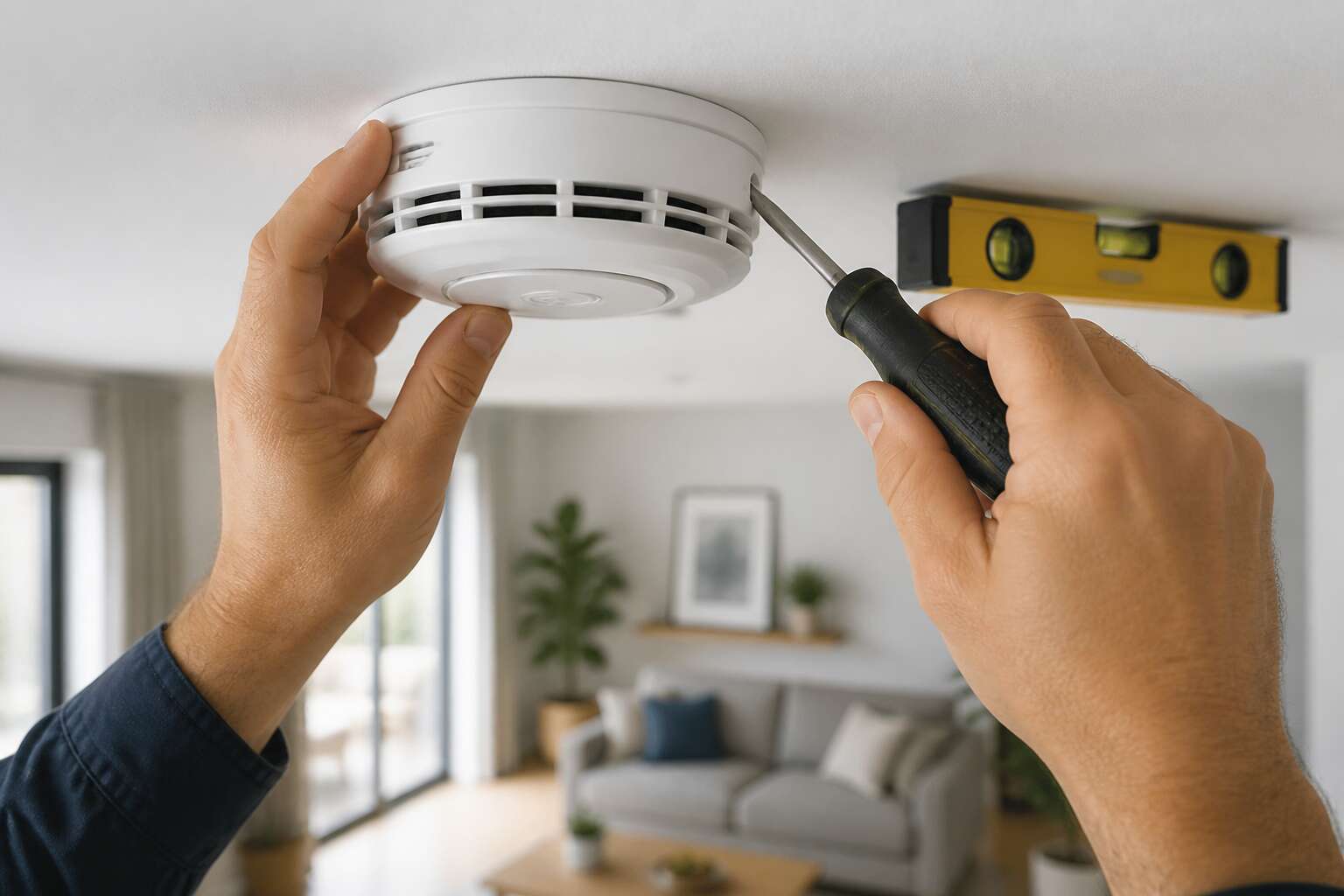
On-site installation is the final test. Municipal fire safety codes demand proper placement and wiring. A detector that passed lab tests can still fail if mounted near a vent. So builders walk the site, measure distances, and adjust before the inspector arrives. That diligence turns a product into protection.
Conducting Functional End-to-End Tests
Functional end-to-end tests separate reliable detection from theoretical protection. Smoke detector builders who skip this stage are gambling with lives and property. In South Africa, we walk the finished building and trigger every alarm on site. Test aerosols, heat sources, and magnetic activators each have their role. Every unit must respond within its rated time, and we record each reading.
- Verify all detectors connect to the correct circuit.
- Activate each sensor and confirm the audible and visual signals.
- Confirm that signals actually reach the central panel and monitoring service.
We also cut mains power to test battery backup. A detector that fails this test is a silent hazard. For smoke detector builders, these end-to-end checks turn installed hardware into protection that works when it matters.
Final Wiring and Mounting Procedures
Certification carries weight in this trade. Smoke detector builders must document every connection, every mounting point, and every test result. The building itself becomes a testament to that diligence. Final wiring demands patience. We run the conductors cleanly into each base, torque the terminals to specification, and clip the detector heads into place until they lock. The mounting procedure is just as deliberate. A detector that sits crooked or loose is a detector that will fail. Testing follows the installation, a quiet interrogation of every unit. We introduce the stimulus. We wait for the response. We record what the panel reports. And when the readings align, the certification becomes truth.


0 Comments