Smoke Detector Wiring Fundamentals
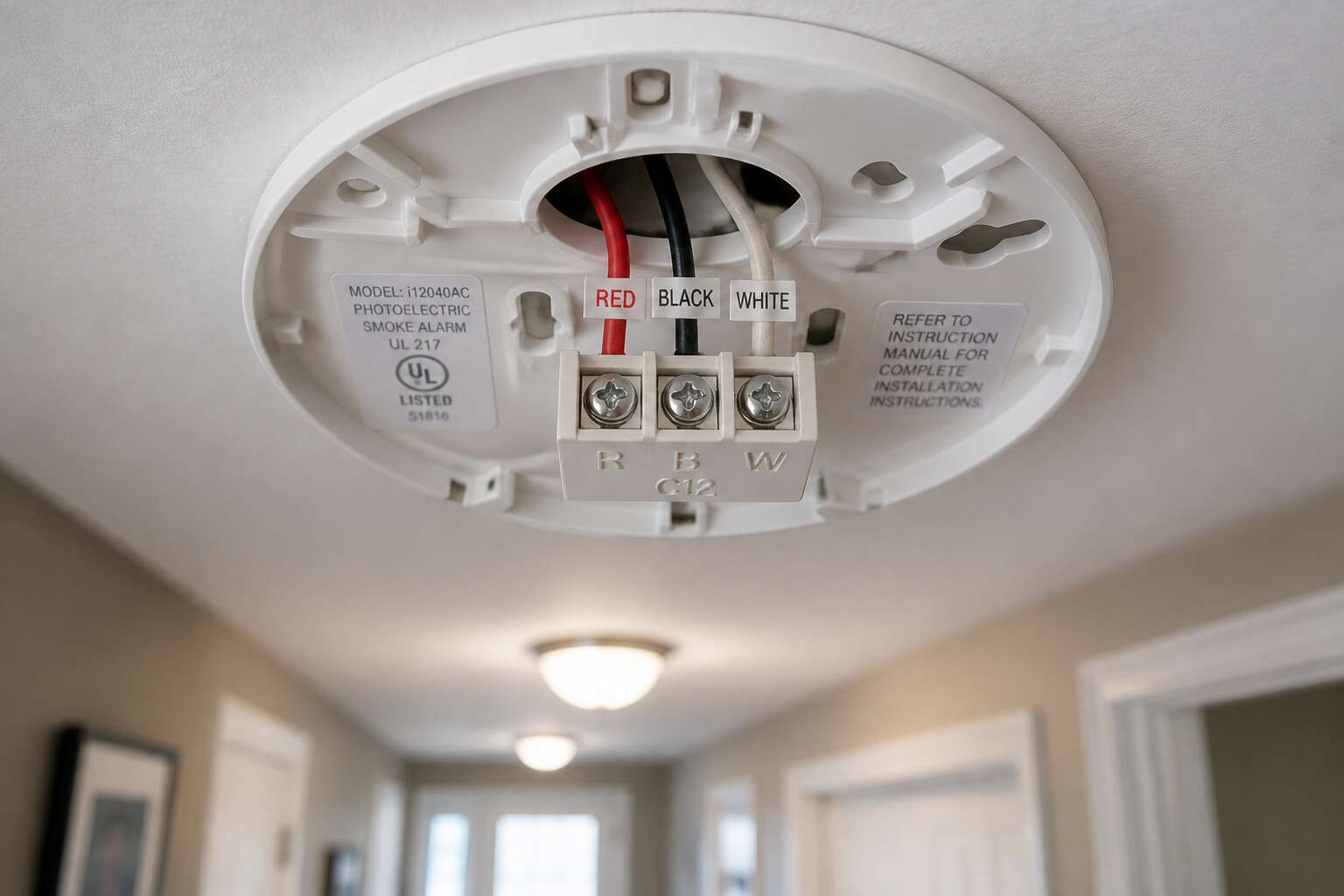
Ask any electrician in Johannesburg and the answer is immediate: smoke detectors use which wiring scheme depends on your home’s age. Older ceilings often have no three wire interconnect. Newer builds usually do. That difference decides whether a single alarm wakes the whole house or just the room it is in.
Battery powered units give you independence from the grid. Hardwired units give you continuity. During load shedding, those two qualities are not equal. I tell clients this all the time.
- Does your ceiling already have cabling?
- Do you need whole home alerts?
- Can you isolate the circuit at the breaker?
Weigh those three questions before buying anything.
Two-Wire and Four-Wire Smoke Detector Systems
In the realm of fire safety, the wiring scheme determines reliability. Most property owners ask smoke detectors use which wiring scheme for their buildings. Two-wire systems combine power and signalling in a single pair. Four-wire systems separate them, offering distinct advantages for complex installations.
Consider the practical differences:
- Two-wire detectors simplify retrofits and reduce cable costs.
- Four-wire systems allow independent supervision and easier troubleshooting.
For large commercial sites, four-wire often wins. The extra conductors provide dedicated zones and clearer fault isolation. For smaller residential projects, two-wire remains the pragmatic choice. The decision hinges on the scale of the system and the need for detailed status monitoring.
Class A and Class B Wiring Configurations
The inquiry into smoke detectors use which wiring scheme is not academic. It is a life safety decision. I have seen Class A and Class B systems in the field. The difference is stark. Class A wiring loops back to the panel from the far end. This creates two paths. A single cable cut does not disable the alarm. Class B wiring terminates at the last detector. One break stops the signal.
Here are the practical differences:
- Class A: two paths, continuous supervision, higher material cost.
- Class B: one path, cost effective, but a break is fatal.
South African installers often choose Class B for domestic work. Class A is reserved for hospitals and industrial plants. The choice depends on the risk.
Conventional and Addressable Smoke Detector Wiring
Choosing between conventional and addressable systems comes down to how smoke detectors use which wiring scheme. Conventional detectors share a single circuit. When one triggers, the panel only identifies the zone. Addressable detectors get individual addresses. Each device reports on its own digital loop. That difference matters for fault finding.
The wiring itself is straightforward:
- Conventional systems use a two wire circuit
- Addressable systems use a communication loop
- Some addressable variants support four wire connections
For a sprawling Cape Town complex, addressable saves hours of tracing. For a small retail box, conventional keeps costs sensible. I have watched technicians lose afternoons to conventional loops, guessing which detector fired. Addressable gives you the exact unit.
South African installs often mix both. Know the purpose before you pull cable.
Selecting the Best Wiring Scheme for Smoke Detectors
The life-saving question in any building project is simple: smoke detectors use which wiring scheme? The answer determines how reliably your alarms communicate, and in an emergency, hesitation is a luxury you do not have. The three primary configurations are straightforward, yet choosing correctly can mean the difference between a contained alert and a silent, deadly failure.
- Direct wiring, where each unit is individually connected to a single circuit.
- Interconnected wiring, which allows all detectors to sound simultaneously when one triggers.
- Wireless integration, a modern alternative that bypasses physical cabling entirely.
Most South African electricians recommend the interconnected hardwired system for new homes. It ensures that a fire in the garage, for instance, wakes the entire household, not just the person sleeping nearby. This approach is simple, proven, and less prone to the signal interference that can plague wireless setups. Your family deserves that certainty.


0 Comments