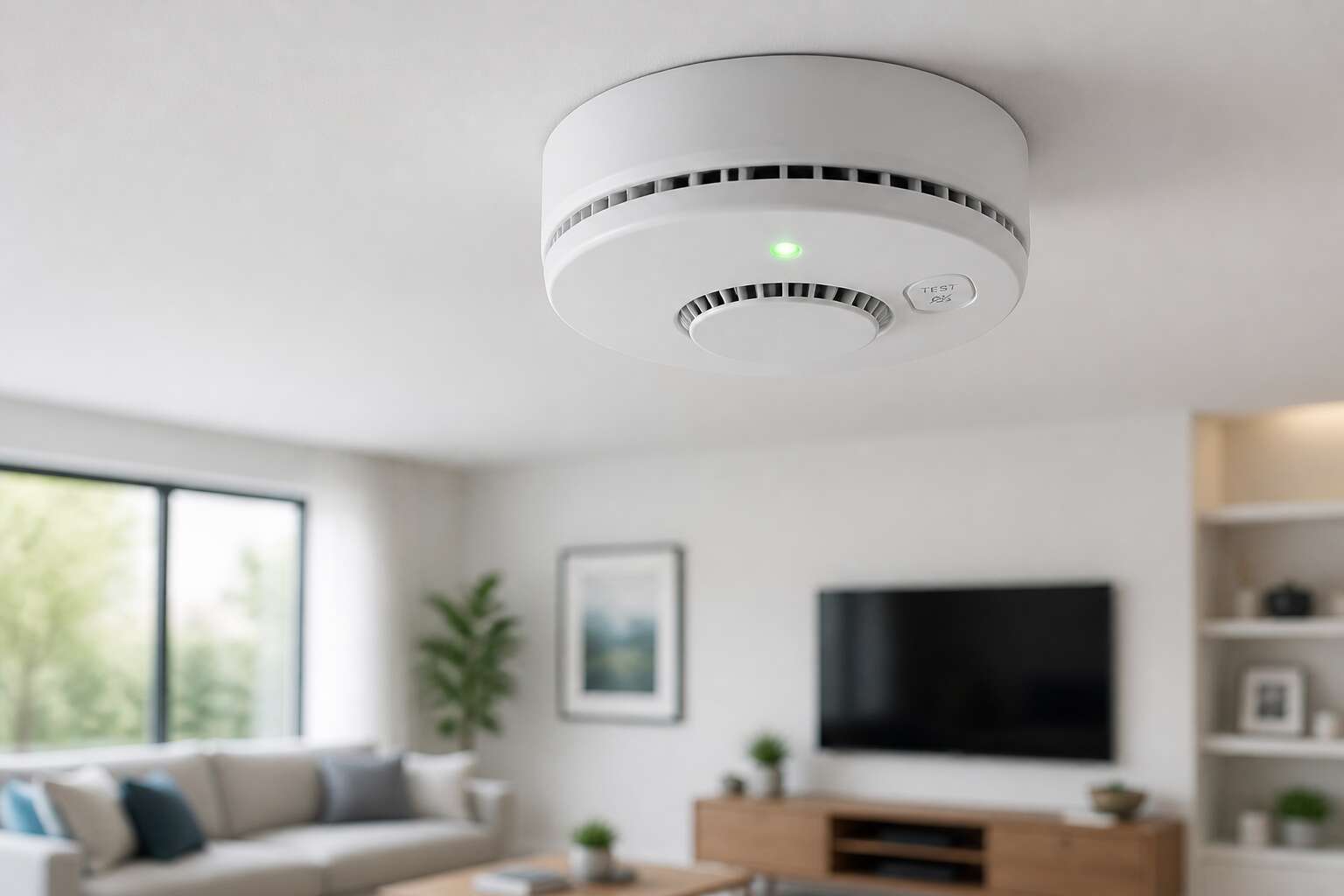
Understanding the Different Types of Smoke Detectors
Ionization and Photoelectric Sensors
Most fire-related fatalities in South Africa occur at night, when a smoke detector is the only line of defence between a family and disaster. Yet the type of sensor inside that device can dramatically change how it performs. Ionization sensors respond quickly to fast, flaming fires. Photoelectric sensors are better at detecting slow, smoldering blazes that produce thick smoke. Neither is superior in every scenario.
Consider the following:
– Ionization: ideal for quick-flame fires, often in kitchens.
– Photoelectric: best for smoldering fires from faulty wiring or upholstery.
When browsing smoke detectors reviews, you will frequently see dual-sensor models highlighted, as they combine both technologies. This nuance matters for South African households, where load shedding can leave electrical faults smoldering unnoticed for hours. Understanding these differences changes how you assess any device on the market.
Dual-Sensor Models
When load shedding strikes, the average home goes quiet. That silence can be deceptive! A dual-sensor smoke detector pairs both detection methods inside one housing, giving you a single device that watches for fast flames and slow smolder alike. Many smoke detectors reviews highlight this configuration as the preferred choice for older homes with aging wiring. For a South African household, the benefit is practical:
- You get protection across a wider range of fire scenarios without installing multiple units.
- Some models allow you to silence false alarms from cooking while maintaining full sensitivity.
The trade-off is cost, but the price gap has narrowed significantly. Certification requires both sensors to meet the required standards.
Smart and Interconnected Detectors
When does a single smoke detector become part of a larger awareness? When it communicates with the others. Smart and interconnected detectors create a networked warning grid throughout a home. One unit sensing danger can trigger every alarm, an advantage for larger South African houses where a kitchen fire might go unnoticed from a distant bedroom.
Smart models send mobile notifications, keeping you informed while away. Interconnected units use wireless protocols, eliminating the need for rewiring. Some offer voice alerts that name the exact room of detected smoke. For elderly residents or young children, this specificity saves precious seconds. Many smoke detectors reviews now celebrate this communication as a standard feature. The price of these systems has declined steadily, making them accessible to most households. Connectivity depends on your Wi-Fi network, and load shedding can interrupt that link. Most units include battery backups as a safeguard.
Power Source Variations
What keeps a smoke detector awake matters as much as what sets it off. Most smoke detectors reviews spend pages on sensors, yet power source variations determine whether your alarm survives load shedding. Battery-only units offer quick installation and portability. Hardwired detectors connect directly to mains electricity, providing constant power during stable grid periods. Hybrid models combine both approaches, using the grid primarily while reserving batteries for emergencies.
South African homeowners increasingly check these details in smoke detectors reviews before purchasing. The choice between replaceable cells and sealed lithium packs affects long-term maintenance, while hardwired connections demand professional installation.
When selecting a unit, consider these power configurations:
- Replaceable 9V batteries require annual replacement and chirp mournfully when neglected.
- Sealed lithium batteries last a decade, matching the detector’s service life.
- Hardwired systems with battery backup offer redundancy during Eskom’s unscheduled intermissions.
Sealed Battery vs. Replaceable Battery
Choosing between a sealed battery and a replaceable one often comes down to how you handle maintenance. In smoke detectors reviews, South African users frequently mention the midnight chirp of a dying 9V cell. That sound is a ritual for some homeowners, a reminder to climb on a chair with a fresh battery. Sealed units remove that chore entirely. You install the detector, test it monthly, and forget it for up to ten years. However, when the sealed battery dies, the entire unit goes to the bin. Replaceable models let you keep the same device for years, but they demand attention. Smoke detectors reviews often highlight this divide, with owners split on which sacrifice they prefer.
Consider your own habits:
- Do you remember annual battery swaps?
- Are you comfortable with a ladder and a screwdriver?
- Do you want a ten year commitment to one device?
The answers will guide you toward the right configuration.
Key Performance Features to Examine
Decibel Output and Alert Range
When evaluating smoke detectors reviews, decibel output and alert range determine whether a fire warning actually reaches the people who need it. A siren rated at 85 decibels at three metres may be insufficient in a large open-plan Johannesburg home or when bedroom doors stay shut. The measurement distance matters as much as the loudness itself.
Some models advertise higher outputs that hold their strength across a full corridor. I have flagged more than one otherwise solid review for glossing over this critical detail!
- Confirm the decibel level at a distance of three metres, not just at the source.
- Compare the frequency pattern, since lower tones penetrate walls and closed doors more reliably.
- Account for the physical layout of your home, including any insulated ceilings that absorb sound.
Your own hearing profile should guide which smoke detectors reviews you trust, especially if sound sleepers dominate your household.
Response Time to Different Fire Types
A detector that takes eleven minutes to notice a smoldering couch fire has failed its single job. Response time to different fire types varies wildly across models, and smoke detectors reviews often bury this data, if they mention it at all. Fast-flaming fires produce little smoke but intense heat; smoldering fires produce thick smoke at cooler temperatures. The European standard EN 54 defines test fire classifications, and they matter more than slick slogans:
- TF1: openly flaming cellulosic fire
- TF2: slow pyrolysis of wood
- TF4: smoldering polyurethane foam
- TF5: flaming liquid fire
A unit optimized for TF5 may register a TF2 event minutes later, which is why smoke detectors reviews should publish response curves rather than vague assurances. Laboratories test under controlled conditions using these specific fires. Those conditions rarely match a Johannesburg loadshedding candle tipped over on a couch, a scenario I have witnessed. Read the classification label.
False Alarm Reduction Mechanisms
False alarms are the leading reason people disable detectors altogether. A unit screaming over burnt toast teaches you to ignore it. Modern models use algorithmic signal processing to distinguish smoke particles from steam or cooking vapors. This matters in South African households where loadshedding forces constant reliance on candles and paraffin heaters, both of which generate deceptive particulate.
When reading smoke detectors reviews, check for specific technologies:
- Triple sensors that measure both light scatter and temperature rise
- Adaptive sensitivity that adjusts to ambient conditions over time
- Husbandry sensors that monitor sensor drift and warn before failure
These features reduce nuisance events without compromising real detection. Some units even incorporate a momentary silence mode via a remote, so you don’t dismount the ceiling to quiet a false trigger.
Self-Testing and Battery Life Indicators
In South Africa, the panic that follows a midnight beep is familiar, but the cause matters more than the noise. When you read smoke detectors reviews, focus on how the unit validates its own readiness. A manual test button only confirms the siren. A self-test checks the sensor chamber, the processor, and the battery connection. Some models run this cycle daily and report faults before you are left unprotected.
Battery life indicators have evolved from a simple chirp. Modern units distinguish a low battery warning from a power recovery chirp, which is essential during loadshedding. The indicators include:
- Voice alerts that say “low battery” instead of generic tones
- An LED color shift when charge drops below 20%
- A documented replacement schedule in the manual
These details separate credible smoke detectors reviews from vague claims. A review that ignores self-testing leaves you guessing about the one device that cannot fail silently.
Smart Home Integration Features
Smart home integration separates a detector from a mere alarm. In South Africa, where loadshedding disrupts Wi-Fi routers, the integration protocol matters as much as the sensor. Some smoke detectors reviews mention Matter or Zigbee compatibility, but ignore how the unit behaves when the network drops. A detector that defaults to local alarm mode during connectivity loss still protects you.
Examine whether the companion app provides push alerts for every event type, including sensor faults and battery thresholds. Also verify if the unit supports automation platforms like Home Assistant or Apple HomeKit. The following features indicate robust integration:
- Offline operation with delayed cloud sync
- Multi-user alert routing to avoid missed notifications
- Geofencing that adjusts sensitivity when you are away
Credible smoke detectors reviews document these behaviours instead of listing shiny app screenshots.
Interpreting Expert and Customer Reviews
Weighting Expert Testing and Certifications
A single certification can settle a debate that fifty customer comments cannot. When reading smoke detectors reviews, the distinction between expert testing and personal opinion matters more than most shoppers realise. I have watched buyers select a detector because one review praised its loud alarm, while missing the fact that it carries no recognised safety certification.
Weigh the evidence in this order:
– Prioritise detectors certified by recognised bodies such as SABS or EN standards.
– Look for expert test results that measure response to real fire scenarios.
– Treat customer reviews as a source of usability information, not safety proof.
Expert testing happens under controlled conditions. Customer reviews reflect real homes with variables like ceiling height and room size. Both carry value. But when a certification contradicts a glowing review, trust the certification. In my reading of smoke detectors reviews, the repeatable result always outperforms a single personal experience.
Spotting Patterns in User Complaints
When comparing smoke detectors reviews, I look for the complaint that repeats itself. It matters more than any single star rating. A grievance appearing in twenty separate reviews signals a design flaw. South African buyers often mention false alarms near kitchens or detectors that mount awkwardly on sloped ceilings. These patterns deserve attention.
Pay attention to when complaints occur. Faults surfacing in the first month differ from those emerging after two years. Some detectors fail quietly, without the warning chirp that should precede a dead battery.
A pattern emerges when you track three things:
- Frequency: how often the issue appears across reviews
- Context: whether complaints involve installation or daily use
- Consistency: whether the same fault appears across multiple retailers
Expert findings measure performance in controlled conditions. Customer complaints reveal behaviour in actual homes. Both sources matter, though they often disagree.
Checking Long-Term Reliability Reports
Expert reviews and customer feedback often tell different stories. A laboratory test might praise a detector’s response time while homeowners report nuisance alarms. The reality lies between these accounts.
Long-term reliability reports address this divide. These documents track how detectors perform after years of service, revealing faults invisible to short-term testing. South African households face unique stresses. Humidity variations along the coast and power fluctuations expose weaknesses that never appear in controlled lab conditions.
When reading smoke detectors reviews, I weigh three factors:
- Review age: recent complaints may indicate manufacturing changes
- Reviewer location: coastal humidity affects detectors differently than Highveld dust
- Replacement patterns: recurring mentions of early failure signal design problems
Customer anecdotes capture daily reality. Expert data offers consistent measurement. Each fills gaps the other leaves open.
Understanding Nuisance Alarm Frequency
Expert reviews measure sensitivity, but homeowners live with the consequences. Nuisance alarm frequency is where these accounts diverge. A detector that triggers on steam or cooking smoke becomes a disarmed hazard. When reading smoke detectors reviews, I separate data from daily experience. Watch for three warning signs:
- Repeated false alarms tied to one activity, like bathing or frying
- Complaints that spike during specific seasons, indicating environmental sensitivity
- Reports that the silence button gets more use than the alarm itself
These patterns reveal more than any lab result. Coastal humidity and Highveld dust alter performance in ways controlled tests cannot capture. Trust the collective experience of your neighbours over a single reviewer’s pristine conditions.
Environmental and Installation Factors in Reviews
Ceiling vs. Wall Mounting Recommendations
Where you mount a detector can decide whether it saves a life. Coastal salt air, Highveld dust, and the steam from a hot bath all reshape how a sensor behaves, which is why smoke detectors reviews are as much about placement as they are about hardware.
Ceiling mounting is the first choice, since smoke rises naturally. Keep the unit at least 300 millimetres from walls and avoid the stagnant pockets near ceiling fans or return air ducts. Wall mounting works only as a fallback on sloped ceilings, and the top edge should sit within 100 millimetres of the ceiling.
After reading dozens of user reports, I notice these installation errors recurring:
- Placing units too close to kitchen ventilation
- Ignoring temperature extremes in insulated roof spaces
- Mounting in corners where airflow stalls
Kitchen Areas and Stovetop Distance
Kitchen placement triggers the loudest arguments in smoke detectors reviews. The sensor that catches a grease fire is the same one that screams over a braai’s smoke plume. South African homes often have open-plan kitchens, so cooking fumes reach the detector directly.
I keep the unit two to three metres from the stovetop. Closer than that, expect weekly nuisance alarms. Farther, and you might miss a fast fire behind the counter. The complaints repeat across user reports:
- Wall mounting above the stove, which catches direct steam
- Units near the fryer exhaust outlet
- Sensors with high sensitivity in gas burner kitchens
Basements and Attic Coverage Needs
Basements in South African homes rarely stay mild. Damp winter air, concrete walls, and poor ventilation create an environment where detectors struggle. Attics face the opposite problem. Summer heat in a roof void can exceed 60 degrees Celsius, which degrades sensor components over time. Both spaces appear constantly in smoke detectors reviews, usually with a common complaint: the unit either never triggers or dies too early.
- Extreme temperature shifts between day and night
- Dust and insulation fibres settling inside the sensor chamber
- High humidity from water seeping through basement walls
- Spiders and insects nesting in the vents
Coverage needs in these areas are less about distance and more about airflow. A basement detector placed in a corner will miss smoke that pools near the ceiling. An attic unit mounted close to a ventilation gap gets cooler air but fails to catch rising heat from below. South African homeowners who read smoke detectors reviews rarely check these spaces until something fails.
Interconnecting Multiple Detectors
Reading smoke detectors reviews with an eye for installation quirks shows how the environment shapes performance. A unit may earn praise in a test lab but fail in a home with coastal humidity or load shedding voltage dips. The mounting surface matters too. Plasterboard ceilings and timber roofs absorb heat differently, which alters how quickly the sensor reacts.
Then there is the question of linking detectors together. Reviewers often mention that a single alarming unit is not enough. When multiple detectors are interconnected, the whole household hears the warning, including rooms far from the kitchen or hallway. I scan for that.
- Position detectors away from air vents and doorways where drafts scatter smoke.
- Use a wireless interconnect kit if wiring between floors is difficult.
- Match detectors from the same manufacturer to ensure reliable communication.
These details surface repeatedly in smoke detectors reviews, yet they are easy to overlook during installation.
Cost, Maintenance, and Replacement Insights
Upfront Price vs. Long-Term Upkeep
The sticker price on a smoke detector rarely tells the full story. In my experience, a budget unit in South Africa might cost less than a week of groceries, yet its upkeep can cost you more over time. Smoke detectors reviews separate upfront cost from monthly reality.
Maintenance varies by model. Every detector collects dust, and a film of grime dulls its sensitivity. Regular cleaning is essential. More importantly, the entire unit has an expiry date. Most manufacturers specify a decade of service. Your initial investment is always temporary.
Consider these long-term costs:
- Replacing the entire unit after a decade adds to your total cost of ownership.
- Higher-end models often need professional installation or integration fees.
A cheap detector with a failing sensor costs more in lost sleep and false confidence than its premium counterpart ever will, a fact clear only after reading reliable smoke detectors reviews.
Battery Replacement Schedules
Battery replacement schedules are the hidden subplot of smoke detectors reviews. Most units demand fresh batteries every six months, yet many households treat the low battery chirp as a distant suggestion. That approach works until it doesn’t.
In my experience, South African humidity accelerates battery drain. A detector that performed flawlessly in Gauteng might start complaining after three months in Durban. The replacement schedule matters more than the brand sticker.
Consider these practical markers:
– Replace batteries twice yearly, ideally when the clocks change.
– Match the battery type to the manufacturer’s specification.
– Test the unit after every battery swap.
Smoke detectors reviews often note that a forgotten schedule produces the worst outcome. A detector running on a failing battery stays silent, which is exactly when you need it loudest.
Expected Lifespan of Sensors
Smoke detectors reviews rarely mention that every sensor has an expiry date. The working life is usually eight to ten years from the manufacturing date, not the installation date. That nuance matters in South Africa, where heat and coastal salt air accelerate aging. A detector that looks pristine in a Pretoria ceiling can still be functionally retired.
- The manufacturing date stamp usually outlives the purchase receipt.
- A detector that chirps after eight years is not being dramatic. It is being honest.
The cost side is straightforward. A replacement unit costs a few hundred rand. A silent sensor costs a few thousand in insurance excess, if you are lucky. Smart models log their own age and send a notification, which helps people who cannot remember their own phone numbers, let alone a manufacturing date. Smoke detectors reviews that skip the lifespan discussion are missing the point.
Warranty and Customer Support Quality
South African heat does not respect warranties. The average warranty runs one to five years, while the sensor itself lasts eight to ten. That gap matters. Most smoke detectors reviews gloss over what happens when the alarm fails at year six. The warranty has expired. The manufacturer offers a toll-free number. The call center puts you on hold. You pay for the replacement anyway!
I have yet to meet a homeowner who read the warranty before the alarm started chirping. Maintenance costs are minimal unless you ignore the vacuum cleaner. Dust and geyser fumes coat sensors. A can of compressed air costs less than a takeaway coffee. The real expense is time.
Warranty conditions contain surprises:
- Proof of purchase must be a physical receipt, not a bank statement
- Installation by a certified electrician is sometimes mandatory
- Coastal salt corrosion sits firmly in the exclusions column
Customer support quality varies wildly. Some brands answer within minutes. Others lose your serial number twice and blame load shedding.


0 Comments