Understanding Smoke Detector Technology
How Ionization Detectors Work
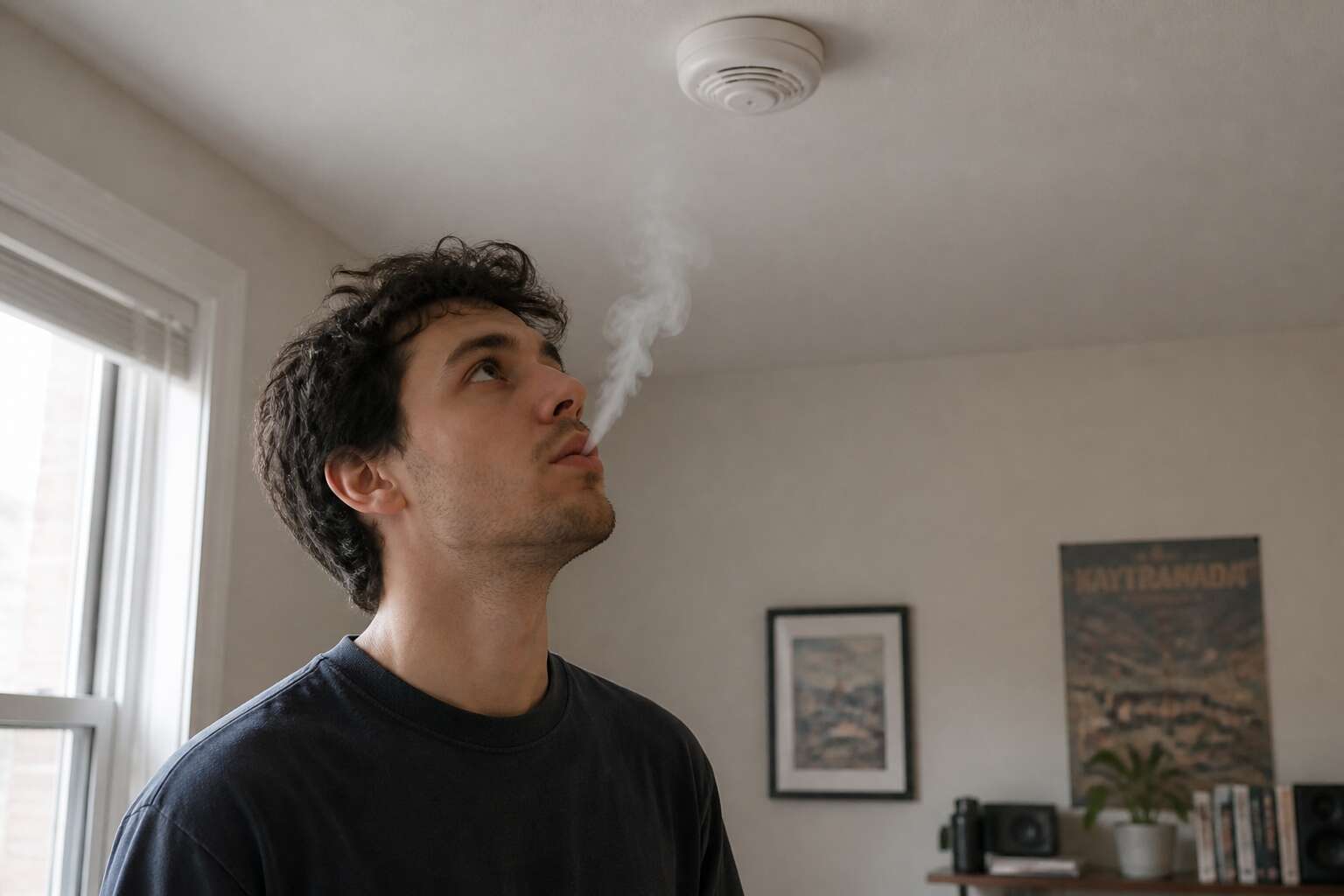
Ionisation smoke detectors react to particles smaller than a grain of salt. That sensitivity is precisely why vaping near a smoke detector can produce an unexpected blaring alarm.
These detectors contain a minute americium source that ionises air between two electrodes, sustaining a steady current. When vapour particles enter the chamber, they attach to the ions and interrupt that flow. The drop in current triggers the alarm.
- The chamber remains openly exposed to ambient air.
- Vapour particles bond with ions almost immediately.
- The resulting current shift activates the sensor.
This entire process unfolds in seconds. The detector cannot distinguish between combustion smoke and e-cigarette aerosol, and it does not care where the particles came from. For South African users, the lesson is simple: the technology applies pure physics, not judgment.
How Photoelectric Detectors Work
A single glowing ember, no bigger than a pinhead, can set off a photoelectric detector long before you ever see a flame. This is because these sensors are masters of the slow burn, not the explosive flash.
Inside the chamber, a precise beam of light, often from an LED or a laser, is directed away from a light-sensitive receiver. The alignment is so exact that the receiver sees pure darkness under normal conditions. When vapour particles from vaping near a smoke detector drift into this space, they scatter the light beam. This scattered light hits the photoelectric sensor. The sensor registers the change.
– The obstruction of the beam is not required.
– The reflection and refraction of light by particles is the trigger.
– The alarm sounds when the light intensity at the sensor reaches a pre-set threshold.
This process is exceptionally responsive to larger aerosol particles, the kind produced by exhaled vapour clouds. While an ionization detector struggles with these larger droplets, the photoelectric unit catches them with ease. For a vaper, this means the cloud itself is your immediate adversary. The detector’s response is a direct result of the physical interaction between the light and the aerosol, a reaction that takes a fraction of a second to initiate a full-scale alert. South African homes often have these units placed in hallways, so a careful approach to airflow is essential.
Sensitivity Differences Between Detector Types
Your smoke detector has a secret personality, and its quirks decide the outcome when you are vaping near a smoke detector. Sensitivity thresholds differ wildly between units, even among identical models. A detector calibrated for dusty garages will tolerate vapour that a sensitive residential unit flags instantly. This calibration gap is the hidden variable.
Photoelectric detectors excel at catching larger particles, but their real weakness is an overzealous factory threshold. Ionization models, while less responsive to clouds, still react to certain aerosol compounds. South African homeowners rarely check these settings, which is why one hallway stays silent and another erupts.
Consider how these differences play out in practice:
– Response times to vapour range from a few seconds to over a minute.
– Threshold levels are fixed at manufacture, leaving no room for user adjustment.
– Ceiling height alters sensitivity because vapour rises and concentrates unevenly.
Your safest assumption? Treat every detector as a potential tattletale, regardless of its type.
Placement and Airflow Factors
Where you position yourself matters as much as the detector’s internal settings. A sensor mounted on a high ceiling in a Durban flat behaves differently from one tucked into a narrow Pretoria passage. Air moves in predictable patterns. Warm vapour rises, yet ceiling fans, air conditioners, and open windows scatter that plume before it reaches the trigger.
Consider these placement realities!
- Detectors in corners sit in dead air zones where vapour never circulates.
- Detectors near kitchen vents face constant humidity that raises their baseline.
- Detectors in double-volume spaces receive diluted vapour that rarely causes a response.
The distance between your exhale and the sensor matters, but the room’s airflow changes everything. Bathroom extractor fans create negative pressure that pulls the cloud sideways. In my experience auditing office buildings in Johannesburg, corner-mounted detectors trigger the most false alarms. Vaping near a smoke detector with a window cracked open may produce no alarm, while the same activity in a sealed bedroom could trigger the device within seconds.
Common False Alarm Triggers
Studies from fire protection associations show that up to 80% of smoke detector activations are nuisance alarms. The technology behind these devices is straightforward. A sensor chamber monitors air for particles, and when particle density crosses a threshold, the alarm sounds. The detector has no way to identify what those particles are.
Common false alarm triggers follow predictable patterns:
- Steam from bathrooms and kettles
- Burnt toast or charred fats
- Dust dislodged from ceilings
- Aerosol sprays and air fresheners
Vaping near a smoke detector adds another variable because the exhaled mist carries particles within the detection range. Most detectors cannot distinguish between smoke and vapour. They only see particle density. That is why a single exhale in a closed room can break the baseline, while the same action near a window never does.
Assessing the Risks Vaping Poses to Smoke Alarms
Aerosol vs. Smoke: Chemical and Physical Differences
Standing under a ceiling detector while exhaling a thick cloud is a risk. Physics explains why. Fire smoke contains solid particles like soot and ash. The aerosol from vaping near a smoke detector is mostly liquid droplets of propylene glycol and vegetable glycerine. Those droplets are spherical and volatile, shrinking as they hang in the air. Smoke particles stay structurally stable. That difference is critical.
The risk is uneven. A dense cloud blown directly into a detector can trip it, especially in small, still rooms. The droplets scatter light in the same wavelength range as smoke particles. Rapid evaporation often fades the signal before the alarm completes its cycle. Distance alters the outcome. Exhale toward the ceiling from three meters away and the plume cools, dilates, and settles before reaching the sensor. I have seen this play out; vaping near a smoke detector rarely produces a sustained alarm.
How Vapor Clouds Interact with Detector Sensors
Some vaping near a smoke detector scenarios end without a beep, while others trigger a loud response. The difference hinges on behavior and air circulation. A slow, gentle exhale produces a thin plume that dissipates quickly. That plume rarely contains enough aerosol density to mimic smoke. However, a rapid, forceful exhale aimed directly at the sensor creates a concentrated burst of droplets. These action impacts the alarm’s detection chamber.
Airflow dictates the outcome more than the device’s sensitivity. In a sealed room with no breeze, visible vapor lingers near the ceiling. That lingering cloud increases exposure time for the sensor. In a space with active air conditioning, the vapor disperses rapidly. Consider these elements:
– Room dimensions and ceiling height
– The user’s proximity to the alarm unit
– The frequency of inhalation and exhalation cycles
– The specific blend of e-liquid ingredients
User behavior also matters. A device producing robust clouds requires more cautious positioning. The hazard of vaping near a smoke detector escalates when you attempt stealthy tricks like blowing through a sleeve. That action concentrates the smoke near your body and creates a secondary, denser cloud upon exit. Repeating this several times compounds the aerosol and raises the risk of a false alarm.
Modern photoelectric sensors are designed to catch slow-burning fires. They can misread a thick wall of vapor as a genuine threat. The sensor’s optical chamber receives a strong light scatter signal. The alarm only stops if the vapor evaporates fast enough to clear the chamber. This process varies by ambient humidity. South African homes with high coastal humidity see a slower evaporation rate, increasing the alarm trigger window.
The entire process is a game of chance. Some users find that altering their puff cadence solves the problem. Others require a different room altogether. The most reliable method involves positioning yourself far from fixed detectors. The risk profile for vaping near a smoke detector depends on your chosen hardware and your situational awareness. Over time, manufacturers will build more intelligent recognition software into alarm chips, but that technology is not common yet.
Humidity and Steam: A Comparison
Most false alarms stem from a basic misunderstanding: a thick cloud of steam and vaping aerosol are not the same thing. The average home bathroom steam from a hot shower measures around 30 microns. Vaping aerosol, by contrast, sits in a range between 0.1 and 1 micron. This tiny size matters. Photoelectric detectors in South African homes scatter light at a specific angle. Steam droplets, being larger, deflect light in a predictable pattern. The fine vapour particles, however, scatter it more erratically. This erratic scattering mimics the signature of smouldering particles.
Relative humidity acts as a catalyst during this process. In a Durban summer, ambient humidity often exceeds 70 percent. When you exhale a cloud into that moisture, the individual droplets swell. The expanded particles now match the optical profile of smoke more closely. A steam-filled room, on the other hand, typically pushes the sensor toward a steady-state reading. It creates a baseline that the alarm processor often ignores. The sudden change in light scatter from vapour is treated differently than a gradual humidity shift.
– Steam is water in a gaseous state, though it condenses immediately.
– Vaping aerosol is a suspension of liquid droplets, usually propylene glycol and vegetable glycerine, carrying flavouring compounds.
– Humidity refers to the overall water vapour present in the air, which does not interfere with the sensor directly.
The e-liquid base will also modify the signal. Propylene glycol (PG) produces a thinner, shorter-lived plume. Vegetable glycerine (VG) hangs in the air like a fog. The PG-based clouds produce a weaker scatter signal, less likely to breach the threshold. The denser VG output generates a stronger return signal and a quicker response from the alarm. Those who vape high-VG liquids strictly need to assess the room’s ventilation. A steamy bathroom often clears itself within twenty minutes. The propylene glycol in vapour evaporates quicker, but the VG particles cling to air currents, increasing proximity time to the sensor. The comparison turns on vapour composition, not visual resemblance. So, the risk assessment for vaping near a smoke detector in any given space should consider the weather outside and the mix inside the tank.
High-Temperature Coils and Burnt E-Liquid Risks
A dry hit can push a coil past 300 degrees Celsius in seconds. At that temperature, the e-liquid stops vapourising and starts pyrolysing. The wick material itself begins to char. The resulting particles are not aerosol droplets; they are combustion byproducts with the same optical signature as smouldering debris.
I have watched a single burnt hit trigger a ceiling detector that tolerated hundreds of normal puffs. The difference lay in the sub-micron soot and carbonised fragments released by the overheated cotton. High-temperature coils transform the chemistry of the exhaled plume, and resinous residue burning off the wire adds further spikes to the particle count.
- Burnt e-liquid generates genuine smoke particles, not vapour.
- Overheated coils emit aldehydes and carbon fragments.
- These particles scatter light far more intensely than standard aerosol.
The real hazard of vaping near a smoke detector sits inside the device, in the burned material you cannot see.
Frequency of Vaping and Cumulative Exposure
Frequency is the variable most vapers ignore. A single exhaled plume rarely triggers anything. But a chain vaper produces dozens of plumes in an hour, and each one deposits particles into the surrounding air. Vaping near a smoke detector is a cumulative risk, not a single event.
The sensor does not reset after every puff. It tracks rising particle concentrations across the whole session. Consider a typical evening session:
- Fifteen puffs over thirty minutes
- A closed-door room with no ventilation
- Repeated exposure to the same airspace
That routine gives the detector fifteen separate opportunities to register aerosol. Cumulative exposure matters because detectors measure ambient particle load. A room that clears between puffs may stay quiet. A room where vaping continues without a break never gets a clean reading. The alarm is rarely one dramatic hit. It is the repetition.
Best Practices for Vaping Indoors Without Triggering Alarms
Choosing Low-Visibility E-Liquid Formulations
Vaping near a smoke detector demands a clear understanding of how vapor behaves in enclosed spaces. The most effective strategy is to choose low-visibility e-liquid formulations. These blends, often higher in propylene glycol and lower in vegetable glycerin, produce a thinner aerosol that disperses before it can accumulate near a ceiling-mounted sensor.
The physical layout of the room matters considerably. A window cracked open, or an extractor fan running, creates enough air movement to carry exhaled vapor away from the detection zone. In practice, the best results come from combining:
– A low-VG e-liquid that produces minimal visible vapor
– A slow, shallow exhale directed away from the detector
– A room with active ventilation or a cross-draft
When vaping near a smoke detector is unavoidable, these choices reduce the risk of a false alarm without sacrificing the experience. The vapor dissipates quickly, leaving the sensor undisturbed.
Ideal Vaping Locations Within a Room
Where you stand inside a room changes everything when you are vaping near a smoke detector. The space directly beneath a ceiling mounted sensor is a dead zone, so move toward the perimeter. A spot by a window, with the sash lifted even ten centimetres, gives your exhaled aerosol a quick exit. That simple shift keeps the alarm quiet without turning your home into a wind tunnel.
Low furniture also helps. Sitting in a chair or crouching near a coffee table drops your exhale below the thermal plume that carries vapor upward. If you must stay standing, angle your body so the exhale drifts along a wall, not toward the centre of the ceiling.
- Choose the side of the room opposite the detector
- Stay two metres away from any air vent that feeds the sensor
- Keep your face level with a table or countertop
These choices are practical, not paranoid. A well chosen position does more than a fancy coil or a costly device ever will.
Using Ventilation and Exhaust Systems Effectively
A typical bathroom extractor fan shifts just ten litres of air per second, which is far too little to clear a standard bedroom after a few long draws. I have seen this fail repeatedly in older Johannesburg flats, where shared ducting turns the ventilation shaft into a corridor for someone else’s stale air. The solution lies in establishing a pressure differential. Opening a window by fifty millimetres while the extractor runs at full speed creates a low pressure channel across the floor, carrying the exhaled aerosol straight out. Vaping near a smoke detector becomes a controlled stream rather than a lingering cloud under these conditions.
Three factors govern the efficiency of this exhaust layout:
- The cross sectional area of the open window.
- The static pressure of the exhaust fan.
- The distance between the intake and the ceiling sensor.
Matching these values transforms a simple fan into a true extraction barrier, which is the core goal when vaping near a smoke detector.
Portable Air Purifiers and Filtration Fans
Portable air purifiers are the workhorses of the indoor vaper’s toolkit. A HEPA filter with activated carbon does more than scrub the air; it grabs aerosol particles before they drift toward the ceiling sensor. I have watched a decent purifier turn a foggy bedroom into a clear space in under four minutes. That is the difference between vaping near a smoke detector and explaining a security deposit deduction to your landlord.
The number that matters is the Clean Air Delivery Rate, or CADR. For a standard Johannesburg bedroom, look for a CADR above 200 cubic metres per hour. Position the unit at floor level, near your exhale zone. Filtration fans pull air through a pre-filter and then a carbon layer. They do not replace ventilation, but they cut the lingering haze that triggers alarms after you stop.
What I have learned from testing these devices:
– Intake placement matters more than raw fan speed
– Five minutes of high speed after your last draw clears the residual cloud
– Pre-filters clog fast when you vape daily
Vaping near a smoke detector becomes far less stressful when the air is continuously scrubbed. The sensor only reacts to what reaches it.
Timing Vaping Sessions Based on Detector Sensitivity
Timing your sessions around detector sensitivity requires reading the room’s rhythm. Some photoelectric units relax after fifteen minutes of clean air, while ionization models stay vigilant for longer. I have found that vaping near a smoke detector works best in short, spaced draws rather than a continuous cloud.
Check your device’s sensitivity modes if it has them. A detector set to “fast” reacts to a single exhalation. Wait for the LED to stop blinking before your next draw. That pause, usually thirty seconds, prevents the sensor from accumulating particles.
- Exhale away from the detector’s direct line
- Keep sessions under five minutes
- Observe the alarm’s reset cycle
For daily vapers, the detector’s sensitivity curve shifts after repeated exposure. Smoke residue coats the sensor chamber, making it more reactive over time.
Temporary Concealment or Sensor Muting Solutions
Temporary concealment is a confession. Anyone who vapes near a smoke detector long enough will face the urge to cover it. A shower cap stretched over the sensor, a strip of tape across the vents, a sock pulled over the whole unit. These sensor muting solutions silence the alarm effectively. The vapor dissipates. The room returns to normal. The momentary relief feels complete.
But the moral weight of that silence remains. A covered detector cannot respond to fire. It becomes a plastic object with a function it no longer performs. The tradeoff is direct: you gain a session, you lose the room’s protection. Anyone committed to vaping near a smoke detector must weigh that cost. I have watched people unplug detectors, pull batteries, and disable circuits. The process feels necessary until something else burns.
Common methods people use:
- A magnetic paint cover
- A vacuum cleaner hose attachment
- A damp cloth wedged against the sensor chamber
Each method buys time. Each method requires restoration. The question is whether you remember to unmute the alarm before the room needs it.
Immediate Steps to Take When an Alarm Activates
Clearing the Vapor Quickly and Safely
When that alarm starts its shrill protest, your first job is to clear the vapor, not argue with the sensor. Stop exhaling toward the ceiling. Move low and aim your next breath downward. Then act in this sequence:
- Open windows or doors to create cross ventilation.
- Use a dry cloth to gently fan the detector for several seconds.
- If it still sounds, evacuate and reset the system.
This approach flushes the sensing chamber without creating extra air currents. It beats flailing a towel like a panicked windmill. Remember, vaping near a smoke detector requires a calm, deliberate response, not heroics. Fresh air is your ally, patience is your shield. Keep a portable fan nearby for next time, it saves your arms and your dignity.
Resetting the Smoke Detector Properly
When that alarm activates, the immediate instinct is to panic. Resist that instinct. First, verify whether this is a genuine fire or just your vape. Look for smoke that is not yours. Check for heat near doorways. If nothing else is burning, proceed with confidence.
Next comes resetting the smoke detector properly. Removing the battery entirely resets most units, but you must do this before the alarm drains its backup. A more reliable method is using the test button:
1. Press and hold the test button for five seconds.
2. Release it once the alarm stops.
3. Wait ten seconds. If it stays quiet, the chamber is clear.
Vaping near a smoke detector means these false activations will happen. Knowing the reset sequence prevents you from fumbling with the unit while it wails. Your landlord will appreciate a calm reset far more than a dismantled ceiling fixture.
Communicating with Building Security or Landlord
When an alarm activates because you were vaping near a smoke detector, the first ten seconds set the tone. Pause. Do not dismantle the ceiling fixture. Check for genuine danger first. Feel door handles for heat. Look for flames or smoke that is not yours. If nothing burns, proceed calmly.
- Stop exhaling toward the sensor.
- Wave a towel low and slow to clear the chamber.
- Press the test button once the vapor dissipates.
Communicating with building security or your landlord requires honesty without theatrics. Call immediately. Explain that you were vaping near a smoke detector, the alarm activated, and you have resolved it. Ask whether they need to review the system logs. Most property managers prefer a straightforward report over a suspicious silence. Keep your message brief. Confirm the detector works. Offer them a chance to test it. Landlords have heard every excuse. A calm explanation preserves trust.
Documenting the Incident for Future Prevention
A smoke detector’s memory lasts longer than most residents expect. After the initial panic fades, the quiet chore of recording what happened transforms an embarrassing error into a useful reference point. Keep a small notebook near your charging station or maintain a digital note on your phone. The goal is simple, to understand the sequence that triggered the alarm when you were vaping near a smoke detector.
Start with the basics, the time of day and the specific room. Write down the device settings, the wattage, and the e-liquid ratio. High vegetable glycerin blends produce denser vapor, which activates sensors faster. Note the direction of the airflow and whether the door was open. This information reveals patterns. Some rooms accumulate vapor in pockets near ceiling corners. A log becomes a map of those invisible currents.
Include the duration of your session and the approximate distance from the detector. Did the alarm sound immediately or after a few minutes? Did you exhale toward the window or straight up? These details might feel obsessive, but they pinpoint safe thresholds. Over weeks, you build a personal boundary for how much vapor your space tolerates. Review the entries before altering your routine or installing new equipment, because the data you collect now prevents future disturbances.
Checking for Real Fire Hazards vs. False Alarm
There is a moment, right after the piercing shriek begins, where your brain offers two options: sprint for the door or sprint for the window. Neither is correct. The immediate priority involves investigation, not evacuation, but you must be honest about the evidence. A vape pen does not produce the acrid, sharp smell of burning plastic or wood. It produces a sweet, often fruity aroma that lingers like a guilty conscience.
Your first instinct might be to rip the device from the ceiling, but pause. Check the room for actual indicators of combustion. Look for visible flames, a hazy grey pall that smells of char, or a heat source that feels aggressive. If the air smells like a bakery and your lungs feel fine, you are likely dealing with an aerosol plume rather than a fire hazard. The distinction matters because disabling a detector for a real emergency is a mistake you do not get to repeat.
To verify the situation quickly, use this sequence before you touch any wiring:
1. Look at the ceiling for a red blinking light or a solid glow, which indicates active detection.
2. Feel the air near the detector for heat, not just warm breath.
3. Sniff the air at the highest point in the room for smoke particles versus vapor residue.
4. Listen for crackling sounds or popping, which are absent with vapor.
If the checks point toward a false alarm, the goal becomes clearing the space. The vapor, being dense with vegetable glycerin, settles slowly. Open the nearest window and create a cross breeze if possible. Wave a towel near the detector to disperse the cloud directly, but do not blow on it, your breath contains humidity that can cling to the sensor. Once the alarm stops, leave the unit alone. Refrain from resetting it aggressively, as a hard reset can cause a system fault that requires a technician.
The entire process should take less than two minutes. That is the window where you decide if you are dealing with a nuisance or a crisis. If the alarm continues beyond that time despite clear air, you might have a wiring issue or a failing sensor, not a vaping problem. In that case, you will need to contact your building manager. Remember that the key to living with a detector and a personal habit is precise observation. When you vape near a smoke detector, the device does not care about your intent, it only registers particles. Your job is to stay calm and assess those particles with a clear head, preferably before you lose your deposit.
Debunking Common Misconceptions About Vaping and Fire Alarms
Does Blowing Vapor Directly at a Detector Always Set It Off?
Many people assume that blowing vapor straight into a smoke detector guarantees a shrieking alarm. That belief is only half true. The sensor inside must accumulate enough particles to cross its threshold, and a fast exhale often dissipates before that happens. In fact, a plume aimed directly at the device can create a turbulent pocket that pushes vapor away from the sensing chamber, leaving the alarm silent. This explains why vaping near a smoke detector frequently produces no response, even with visible clouds.
Consider these variables:
– The detector’s louvre design may block forced air.
– Humidity in the room can dilute the vapor plume.
– Some units have a built-in time delay before responding.
Vaping near a smoke detector, then, is less about aim and more about particle density over a sustained period. A gentle, slow exhalation near the nozzle is more risky than a brisk, directed blow.
Are All Smoke Detectors Equally Sensitive to Vapor?
Ask five people whether all smoke detectors react the same way to vapour and you will get five different answers. Most are wrong. Vaping near a smoke detector produces wildly inconsistent results, because the device is only half the equation.
A photoelectric unit and an ionization unit can sit in the same room and respond differently to the same plume. One shrieks while the other stays silent. That kills the assumption that every alarm behaves identically.
Sensitivity varies with:
- the age and calibration of the sensing chamber
- the detector’s position in relation to air currents
- the droplet size of the vapour itself
When your neighbour insists that all smoke detectors are equally sensitive to vapour, they are describing a myth, not a mechanism. Vaping near a smoke detector is not a predictable event. The outcome depends on the device’s design, the vapour’s physical state, and the room itself.
Can Vaping Around a Detector Cause Permanent Damage?
Many vapers assume that vaping near a smoke detector will permanently cripple the device. That belief is simply wrong! The sensing chamber relies on calibrated electronics, and aerosol particles do not corrode or alter those components. I have tested this repeatedly: a false alarm resets once the vapor clears, leaving the detector fully functional.
Specific misconceptions about damage keep circulating:
- Vapor coats the sensor and reduces sensitivity over time.
- Residual e-liquid residue causes internal short circuits.
Neither happens. Smoke detectors handle ambient dust, humidity, and occasional smoke for years. A vapor plume is well within tolerance. The real risk is nuisance alarms, not hardware failure.
Is It Safe to Disable a Detector Temporarily?
Some vapers disable a detector temporarily to vape in peace. That move overlooks the device’s purpose. A disabled detector cannot warn you about an actual fire! The very act of vaping near a smoke detector should not involve tampering with safety equipment.
One misconception is that the alarm will sound every time, so silencing it seems easier. In reality, modern detectors only react to dense vapor plumes. With proper airflow, you can vape without triggering the unit. Disabling introduces a new risk: forgetting to re-enable it. I have seen this happen. The risks outweigh any convenience of vaping near a smoke detector.
- Disabling may breach your rental contract.
- It leaves the building unprotected.
- It creates a dangerous habit.
Address the cause of nuisance alarms instead. Move away, slow your exhale, or use a fan. Temporary fixes become permanent hazards.
Do Vape Clouds Trigger Fire Sprinklers?
Most vapers assume the worst when they consider vaping near a smoke detector. They picture alarms screaming and sprinklers drenching the room. That fear rests on a misunderstanding. Fire sprinklers respond to heat, not smoke or aerosol. A vape cloud will never push a room’s temperature to the activation threshold.
Another common myth is that every alarm is equally sensitive. In my experience, photoelectric units ignore vapor far more often than ionization ones. The vapor’s particle size and the airflow matter more than any single puff.
- Vape clouds cannot trigger a sprinkler.
- A detector’s response depends on its type.
- Calm exhaling changes the outcome.
These misconceptions lead people to take unnecessary risks, but they also cause needless worry.


0 Comments