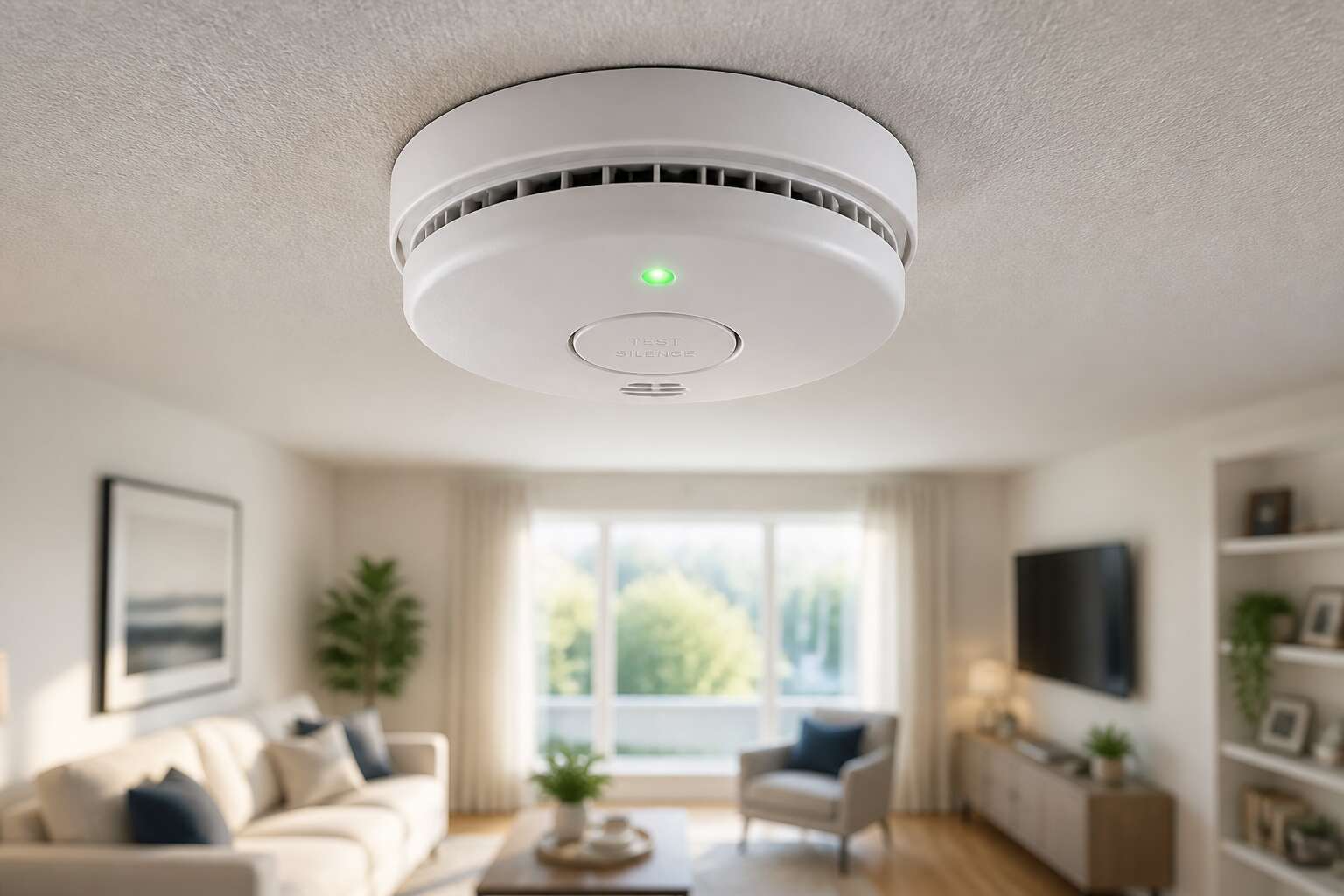
Demystifying Fire Alarm Regulations
Understanding the Legal Framework
When a fire alarm triggers in a Johannesburg office block, the legal process that follows has little to do with the fire itself. The smoke detectors code, embedded within SANS 10105, prescribes everything from detector spacing to testing intervals. Municipalities interpret these requirements differently, creating a compliance environment that shifts by province and city.
Property owners often discover that a system approved in one jurisdiction fails inspection in another. The smoke detectors code defines the technical baseline, while legal obligations extend to record keeping, system responsiveness, and third party verification. Authorities assess three core elements during an inspection:
- Detector placement relative to ceiling obstructions
- Logged maintenance history and battery replacement records
- Interface testing between the alarm panel and emergency services
Each element carries statutory weight. The code frames who is accountable when a system fails and who bears liability after property loss or injury.
Key Regulatory Bodies and Standards
Trying to untangle fire alarm rules in South Africa feels like decoding a secret language. But the alphabet soup is actually straightforward once you know the players. The South African Bureau of Standards (SABS) writes the technical requirements, while local municipalities enforce them through building plan approvals. At the national level, the National Building Regulations (SANS 10400) set the baseline for fire safety, with SANS 10139 covering detection and alarm systems specifically.
Here is who actually matters:
– SABS: publishes SANS 10139, the standard governing fire detection and alarm system design and installation.
– Fire Protection Association of Southern Africa: offers certification and auditor training that many insurers require.
– Local fire services: conduct the physical inspections after occupancy and can issue compliance certificates.
Each layer adds its own complexity. But the smoke detectors code you must meet is always the one your local authority references in their by-laws. Check that document first, because national standards carry only as much weight as the municipality chooses to give them. That single step saves you from expensive retrofits later.
Decoding Local Amendments
Nearly 40% of South African municipalities have amended their fire safety by-laws in the past decade. This quiet wave of local legislation shapes the real-world application of every national standard. The smoke detectors code in your district may demand different placement rules or specific alarm signalling than the SANS baseline suggests. I have seen projects stall because an engineer referenced the national norm without checking the local amendment schedule.
When you approach your municipality, request the specific by-law clause that governs detection systems. Some townships require a central monitoring station for apartment blocks, while others accept local sounders only. The discrepancy changes your entire system design. Builders often discover these variances during the final inspection, which means ripping out compliant but not quite compliant wiring.
– Check the municipal website for published amendments
– Ask the fire services office which standard version they cite
– Review the recent inspection reports for buildings similar to yours
Each of these steps reveals the practical interpretation of the rules. The smoke detectors code that gets enforced is frequently stricter than the official document. This gap between written law and field practice is where costly surprises hide. Local interpretations become precedent, and that precedent becomes your obligation.
When Compliance Is Mandatory
No enforcement officer ever reads the smoke detectors code as advisory. They treat it as a binding obligation toward future occupants. The mandatory weight of these regulations becomes tangible when occupation certificates stall or insurance claims dissolve into litigation.
Consider what compliance actually means on site. An inspector’s tape measure confirms every device placement. The wiring scheme must match the approved documentation down to the last zone. The burden rests with the person who signs off. I have never seen an inspector accept a verbal assurance in place of a documented detail.
- Criminal liability attaches to the building owner when a fatality occurs in a non-compliant structure
- The professional registration of the responsible engineer or architect faces scrutiny
- Civil claims against the developer frequently exceed the construction budget
Demystifying these regulations starts with accepting their compulsory nature. Nobody opts into the smoke detectors code. Compliance is your starting position.
Residential Placement and Coverage Rules
Minimum Bedroom and Hallway Requirements
The new house smells of fresh paint and sawdust, a promise of future mornings. Yet, the true guardian of that promise is silent, fixed to the ceiling in the hallway. Placement is not an aesthetic choice; it is a matter of physics and reaction time. A smoke detector code governs the precise geometry of your safety, ensuring that the device is close enough to the source of danger to be effective, yet positioned to avoid nuisance alarms from the kitchen.
The minimum requirement for sleeping areas is non-negotiable. A detector must be installed inside every room designated for sleeping. This is a direct response to the tragic reality that most fatal fires occur at night. The hallway serving those bedrooms requires its own device, positioned to catch smoke that has not yet infiltrated a closed door. For a multi-level home, the rule applies to each story, including the basement, as the smoke detectors code treats every floor as a separate sanctuary.
To simplify the primary rules, consider the following requirements:
– One hardwired detector with battery backup inside each bedroom
– One detector in the common hallway immediately outside the sleeping areas
– At least one detector on every level of the dwelling, including the basement
– A maximum spacing of 30 feet between detectors on a smooth ceiling
These specifications are not suggestions. They are the minimum standard of care. There is a profound difference between a house that merely shelters you and one that actively watches over you while you dream. Adherence to the South African SANS 10139 standard for smoke detectors ensures that the electronic watchman is neither blind nor mute. Every meter of saved distance is a victory against the smoke that seeks to claim the quiet hours of the night.
Distance Guidelines for Wall and Ceiling Mounts
When mounting a smoke detector on a ceiling, position it as close to the centre of the room as possible. A ceiling-mounted unit should sit at least 10 centimetres away from the nearest wall. Wall-mounted detectors need to be placed 10 to 30 centimetres below the ceiling line. These distances prevent the device from sitting in dead air spaces where smoke might not circulate.
The coverage area for a standard residential detector is roughly 300 square metres per unit. For a more precise layout, follow these guidelines:
- Keep detectors at least 3 metres from cooking appliances to reduce nuisance alarms
- Place a detector on the ceiling at the base of stairs and at the top of each stairwell
- Maintain a distance of at least 0.9 metres from air supply vents and ceiling fans
Sloped ceilings require the detector to be placed within 0.9 metres of the peak, measured horizontally. For tray-shaped ceilings, install the unit on the highest portion. These positioning rules form the backbone of the smoke detectors code and directly affect how quickly a unit responds. Following the smoke detectors code for placement ensures maximum warning time during a fire.
Stairway and Multi-Level Considerations
In residential settings, the smoke detectors code requires coverage on every habitable level, including basements and finished attics. Open-plan interiors complicate this rule because air moves freely across large spans, allowing smoke to dilute before reaching a sensor. Installing one unit per major living zone reduces the chance of a developing fire going unnoticed.
Stairways create a direct channel for smoke between floors, which is why the smoke detectors code places units at both the base and the top of each stairwell. For long or enclosed staircases, an additional detector on the intermediate landing catches smoke as it banks against the ceiling before rising further.
– Split-level homes require a unit on each distinct floor, not just at the stair opening
– Attached garages need separate coverage because vehicle emissions differ from household smoke patterns
– Interconnected detectors across all levels ensure occupants on every floor receive the same warning at the same time
Basement and Attic Exceptions
Basement fires are often the quietest, most dangerous ones in a home. A fire in a cellar can burn for ten minutes or longer before any smoke reaches the living area above. This is why the smoke detectors code does not treat the basement as an optional zone, and it does not rely only on the nearest hallway sensor. A dedicated detector in the buried room is the baseline, usually positioned near the top of the wall or on the ceiling close to the stairs.
Attics present a different set of exceptions. A premature roof void that is not reached by a permanent staircase can sometimes slip out of the requirement, but only when it is truly empty and does not communicate with the living space. Once a homeowner begins storing papers, timber or clothing in that void, the space becomes a storage area and the advisory returns.
- A basement that contains a heater or utility piping stays inside the coverage rule, even if it is unfinished.
- A crawl space under the main floor may be excluded if it is below 1.2 meters and holds no heat source.
- A finished or insulated attic bigger than a helper room counts as a living space, so the smoke detectors code demands full protection.
What matters is how an actual team, not the floor category, affect smoke flow. The code follows the same principle in every unseen corner of a South African home.
Interconnected Alarm Systems
Residential placement follows the movement of a sleeping household, not the convenience of a single ceiling point. The smoke detectors code expects coverage in every distinct living zone, from the lounge to the study, and it insists that each alarm links to the others. I have seen homes where a back bedroom stays silent while the kitchen unit screams; that failure costs precious time. Interconnected alarms solve this by sharing the warning across the whole structure.
Consider what the code actually demands for placement:
- One detector for each separate sleeping area, inside or just outside the door.
- At least one per level, positioned to catch the first thread of smoke.
When the units talk to each other, a fire starting in the garage can wake someone in the furthest corner. That is the real meaning of coverage under the smoke detectors code.
Commercial and Rental Property Obligations
Occupancy Classifications That Change Rules
Commercial landlords and property managers face a different set of obligations when it comes to the smoke detectors code. Unlike single-family homes, rental units and business premises are classified by occupancy type, and that classification dictates the exact placement, power source, and maintenance schedule for alarms. A residential rental flat, for instance, follows different rules than a ground-floor retail shop.
- Residential rentals typically require hardwired alarms with battery backup.
- Offices and light industrial spaces may need interconnected systems tied to the building’s fire panel.
- Mixed-use developments must satisfy the stricter classification among all occupancies present.
The shift from one occupancy to another, say converting a warehouse into live-work lofts, triggers a full re-evaluation under the local fire authority. That change can alter which sections of the smoke detectors code apply, so always verify the current certificate of occupancy before installing or upgrading detection equipment. Ignoring these reclassification rules exposes owners to fines and liability, but a careful audit keeps everyone safe.
Landlord and Tenant Split of Duties
In commercial and rental properties, the smoke detectors code assigns specific duties to each party. Landlords typically handle the initial installation, ensuring detectors meet the local fire safety standard before a tenant moves in. They also remain responsible for repairing faulty units and replacing batteries during scheduled maintenance. Tenants, on the other hand, must perform routine checks and report any malfunctions promptly. A tenant who disables a detector or removes its battery faces liability if an incident occurs. For a clear division of responsibilities, property managers should document these obligations in the lease agreement. That written record prevents disputes and helps both sides comply with the smoke detectors code without confusion. When each party understands their role, the building stays safer and inspections run smoothly.
Documentation and Inspection Frequency
A functional smoke alarm is a quiet promise kept. Written documentation supports that promise. Lease agreements should specify who tests each device, who replaces batteries, and who answers for the smoke detectors code when inspectors arrive. A logbook kept in the electrical room transforms vague memory into verifiable fact.
Inspection frequency follows a set rhythm. Tenants press the test button monthly. Landlords arrange a professional service every six months to verify wiring, sensor calibration, and backup power. Municipal officials may request these records during licence renewals or after a complaint.
Record these essentials:
- The installation date and model number of every detector
- The technician’s signature and findings from each service visit
- All fault reports and the corrective actions taken
This trail of evidence keeps the building aligned with the smoke detectors code and provides clear answers if disputes surface.
Installation Variations by Detector Type
Ionization vs. Photoelectric Standards
The choice between ionization and photoelectric sensors is not a matter of preference. It is a matter of physics and practical safety. Ionization units respond faster to flaming fires with smaller combustion particles, while photoelectric models excel at detecting smoldering fires that produce larger, visible smoke particles. Each type has distinct performance characteristics that alter installation strategies.
In South Africa, the placement of these devices should follow the type of hazard you anticipate. For example, areas near kitchens or bathrooms often benefit from photoelectric units to reduce nuisance alarms from cooking steam. Conversely, utility rooms or workshops may warrant ionization models. The detachment from a one-size-fits-all approach requires careful thought before installation.
Different environments require different sensor approaches:
– Bedrooms and hallways: Use photoelectric to react to slow, smoky fires
– Living areas: Ionization or dual-sensor options offer broader coverage
– Workshop or garage spaces: Photoelectric limits false alarms from exhaust
This differentiation is where the smoke detectors code provides a baseline, but local conditions dictate adjustments. The official fire safety documents outline minimum performance criteria, yet they do not specify sensor placement for every room. You must consider the specific combustion risks in each space. Furthermore, the physical mounting height might shift based on an ionization device’s sensitivity to draft, whereas a photoelectric beam works better on the ceiling.
The regulatory framework demands compliance, but it also permits logical application. The correct installation is one that matches the ideal fire detection for the room’s primary use. By selecting the sensor based on the likely fire, you improve the system’s overall response time. The specific distances and layout remain subject to the South African National Standards, which primarily mandate bedroom coverage some hallways of residence, and the connection to a main electrical supply for new builds.
Combination and Smart Detectors
Combining detector types within a single residence changes how the smoke detectors code applies. A hybrid unit with both ionization and photoelectric sensors offers layered protection without requiring separate devices. Smart detectors take this further by monitoring their own health and sending alerts to your phone. I have seen installations where homeowners pair a smart photoelectric unit near the kitchen and a traditional ionization model in the hallway. That mix respects the code while adapting to daily use.
- Use a dual sensor for open plan areas
- Place smart detectors where Wi-Fi signal remains strong
- Add a battery backup for loadshedding events
The regulatory framework does not mandate smart technology, but it allows it. Local regulations still govern placement and power supply. Smart features simplify testing and record keeping, which helps you maintain compliance without guesswork.
Wireless and Monitored Systems
Wireless detectors suit older South African homes where pulling cables through walls is impractical. The smoke detectors code treats wireless and wired units identically, demanding the same coverage and alarm volume. Batteries become the weak point, so testing every month is non-negotiable.
Monitored systems go further by connecting each detector to a central station or security company. When an alarm sounds, a signal reaches a response team instead of relying on a neighbour to phone for help. That matters in suburbs where fire services take time to arrive.
For wireless or monitored setups to stay compliant:
– Verify the communicator supports more than one network in case one tower fails.
– Test the wireless link between detectors and the control panel monthly.
– Retain at least one local alarm so a central outage does not silence the house.
The technology does not change the rules. It only changes how quickly someone learns about a fire. Choose the system that fits your building structure and your budget.
Sloped Ceiling and A-Frame Calculations
On sloped ceilings, the smoke detectors code demands placement that follows the roof angle rather than the living area below. A detector must sit within 600mm of the peak, measured horizontally, while staying at least 50mm clear of the apex wall. This prevents dead air pockets where warm smoke stalls before reaching the alarm.
For A-frame designs, each slope receives separate coverage. Calculate the horizontal projection first. A 30 degree pitch pushes the detector further down the rafter than a shallow 15 degree slope. Homes with a ceiling angle change mid-span need additional units on both sides of the transition.
- Measure from the apex horizontally, never along the rafter surface
- Add one detector per slope when the pitch exceeds 45 degrees
- Position units on the slope, not on horizontal collar ties
Cape Dutch and modern timber frame homes frequently combine both conditions. Check each slope against the smoke detectors code, then test with smoke at the peak to confirm coverage.
Airflow and Dead Air Space Avoidance
The smoke detectors code sets the baseline, but installation variations by detector type guide practical placement. Ionization units react to fast flames and tolerate higher positions near kitchens, while photoelectric models excel at smoldering fires and belong closer to sleeping areas. Smart detectors require unobstructed air paths; their sensors demand careful positioning around beams and joists.
- Ionization: keep 20 feet from cooking appliances.
- Photoelectric: place near bedroom doors, not directly in vents.
- Combination: follow the strictest mounting rule for both.
Airflow and dead air space avoidance directly impact response time. Ceiling fans, supply registers, or drafty windows redirect smoke away from the sensor. Conversely, dead air spaces, such as the peak of a vaulted ceiling or a tight corner, trap air and prevent detection. The smoke detectors code forbids mounting within 4 inches of any wall or within 36 inches of a ceiling fan. Measure from the airflow source, not the visual center, to ensure the sensor sits in a clear zone.
Systems with Duct and HVAC Integration
The smoke detectors code shifts when ductwork enters the scene. For HVAC integration, mount the unit in the supply air stream, downstream of filters and bends. Ionisation units respond faster to fast-flaming fires but need careful placement away from duct discharge points, where rapid dilution can mask smoke particles. Photoelectric models tolerate duct proximity better because their detection relies on light scatter, not particle size.
For combination units in ducted systems:
– Validate the detector’s airflow rating before mounting; some residential models top out at 4 m/s duct velocity.
– Set sampling tubes perpendicular to airflow for even sensor chamber distribution.
– Check manufacturer specs for minimum straight-duct clearance, usually 1.5 metres from transitions.
The smoke detectors code does not mandate duct mounting for South African homes, but local authorities often require it where an air handling unit serves multiple storeys. Match detector type to HVAC design, not default.
Testing, Maintenance, and Code Enforcement
Required Testing Schedules
A silent alarm is a monument to neglect, a promise whispered to no one. The true weight of the smoke detectors code rests not in the initial installation, but in the long, quiet years that follow. Compliance is a living obligation, and the law demands a regimen of ritualistic checks to ensure the sentinel remains vigilant. Without this care, a home is merely a collection of walls and wires, waiting for a catastrophe that will find no voice.
The prescribed schedule is a simple, yet absolute, contract with safety. Your duties are clear, and they follow a strict cadence:
– A monthly test, performed by depressing the test button until the alarm sounds, verifies the battery and the internal circuitry.
– A quarterly visual inspection checks for physical damage, corrosion, or any insect nesting that could impair the sensor.
– An annual assessment, often mandated by the local municipality, requires a more thorough examination, sometimes demanding a professional certification.
Ignoring this timeline is a direct violation of the smoke detectors code. Local authorities in South Africa do not merely suggest these practices; they enforce them during property inspections and tenant audits. The paperwork, the proof of these tests, becomes your shield and your obligation. A logbook with dates and signatures is not bureaucracy; it is evidence of your diligence. The consequences of an expired test are as concrete as a failed inspection, leaving you open to liability and, far worse, to a silence that cannot be undone.
Documentation and Compliance Logs
Here is the next section of your article.
The quiet hum of a functioning detector is easy to ignore. Yet, the law does not care about your comfort. It cares about proof. When a municipal inspector arrives, they are not looking at the device on your ceiling; they are looking at the documentation that supports it. A unit without a verifiable history is a liability, and the smoke detectors code treats it as such.
Enforcement in South Africa relies heavily on administrative evidence. Your logbook is the single point of failure or success. It must record every interaction with the system, from the monthly pressure test to the replacement of a failed backup battery. Without this ledger, you cannot demonstrate compliance, and the municipality retains full authority to levy fines or halt a property transfer.
– The exact date and time of each test.
– The method used to trigger the alarm.
– The name of the individual who performed the action.
– A clear note for any corrective action taken after a failure.
The paperwork serves a dual purpose: it shields the homeowner from legal culpability and provides a forensic trail for the fire marshal. When a system is maintained against all odds, the silence of the detector becomes a testament to your vigilance. Keep your records pristine, and you turn the code from an abstract threat into a manageable routine. Your signature is the only thing that stands between a passing inspection and a red flag.
Common Violations and Penalties
Testing and maintenance drive enforcement outcomes. A detector that chirps on demand is not enough; the municipality expects a pattern of consistent care. The smoke detectors code identifies specific failures: missing test records, outdated certification, and physical damage to units.
Common violations include:
- Detectors installed beyond their service life
- Bypassed or disconnected alarms during renovations
- Failure to replace units after a documented fault
Penalties range from written warnings to administrative fines that escalate with each inspection cycle. Municipalities in South Africa treat non-compliance as a liability against the property itself. A single outstanding violation can block a home loan application or delay the transfer of ownership. The smoke detectors code enforces through the paper trail you maintain or neglect.
Remediation and Board of Appeals Process
The appeal clock starts the moment the notice lands on your desk. A failed inspection triggers a remediation order under the smoke detectors code. You get a fixed number of days to correct the fault, replace the expired unit, and schedule a re-inspection. Municipalities in South Africa do not offer extensions lightly.
The Board of Appeals Process is your remedy. You file a written objection with the local authority, pay the prescribed fee, and present evidence. The board reviews the inspector’s interpretation of the smoke detectors code. They can confirm, alter, or set aside the penalty.
- Incorrect application of spacing rules
- Faulty equipment used by the inspector
- Procedural errors in the inspection record
Maintenance is the quiet defence. A working detector never summons the board.

0 Comments