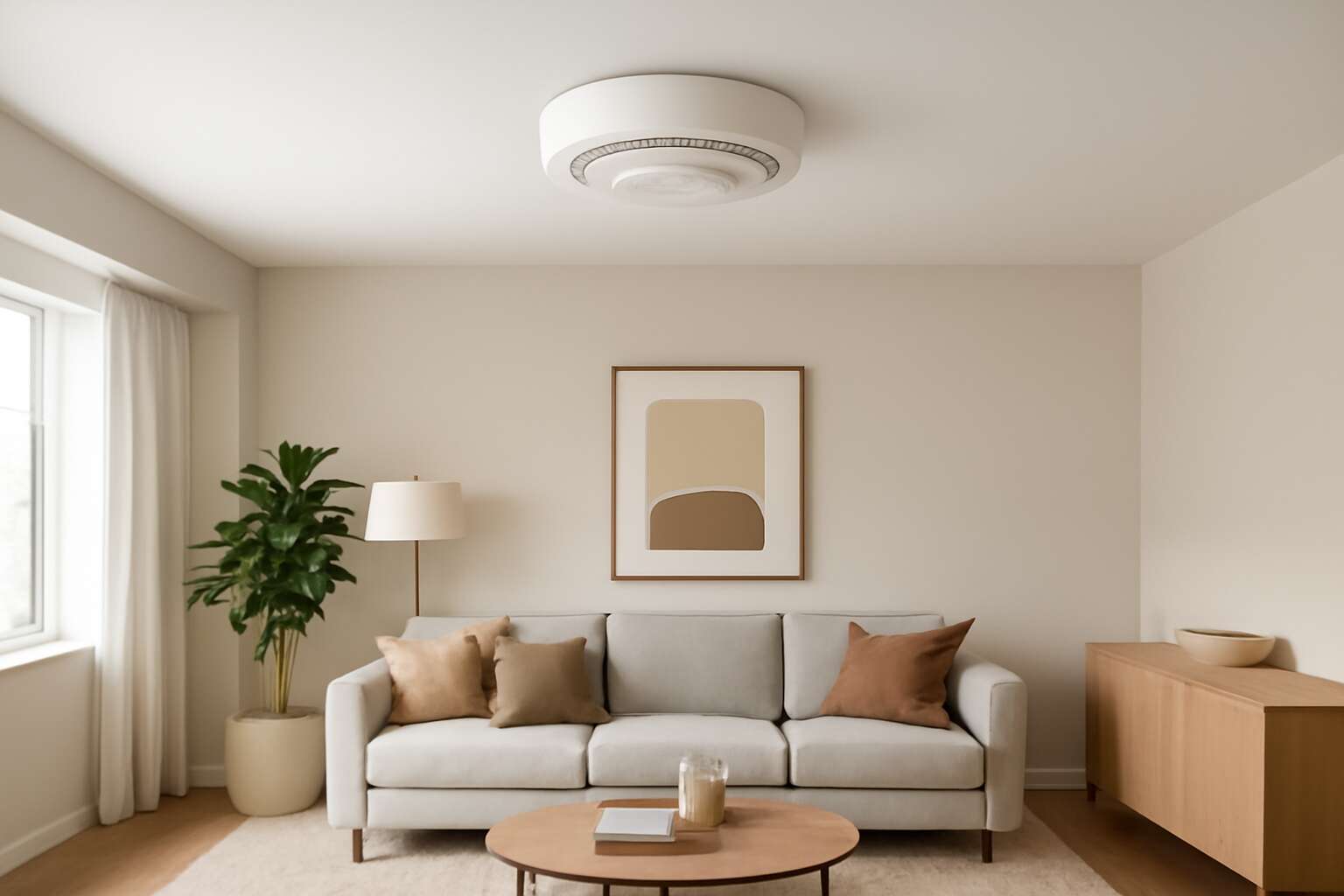
Smart Smoke Alarm Positioning Guidelines for Home Safety
Living room and kitchen placement logic
A safety officer once said, ‘The first spark is invisible until it’s not.’ I hear that line as I walk through SA homes where living meets braai smoke. In this space, smoke detector placement becomes more than architecture; it’s a sentinel waking the house before fear does. An alert turns a close call into a story of survival, murmuring through rooms with calm resolve.
In the living room, air moves in quiet curves—ceiling to corner—without inviting false alarms. Kitchens pose gentler danger: steam and smoke drift, tempting the detector to misread. I crave balance, a listening device that respects daily life while heeding danger’s whisper.
South African homes thrive on shared spaces, and intelligent placement becomes part of daily safety, not a bolt-on feature. I imagine a home that breathes with you, ready to respond when the night keeps its secrets.
Bedroom placement strategies for early warning
In the hush of a South African bedroom, the night keeps its secrets; a single alert can turn fear into first light. Early warning saves lives, with the stark truth that faster notification can cut fire fatalities by as much as 50%.
For bedrooms, the art of smoke detector placement balances vigilance with daily life. Mount on the ceiling near the room’s center, or high on the wall if needed, keeping 10–30 cm from the wall. Avoid bathrooms, vents, and drafts that spark false alarms.
- Ceiling placement near the center, 10–30 cm from the wall.
- Avoid bathrooms, vents, and drafts to reduce false alarms.
- One detector near bedrooms on each level for coverage.
Hallways and open areas coverage
Hallways are the lifelines of a home; smoke travels fast through open spaces. In South African houses, fast smoke detector placement can cut fire fatalities by up to 50%. When the alarm sounds, seconds count, and a well-placed detector can wake a sleeping household before danger thickens. I’ve seen layouts where corridor coverage changes the outcome of a late-night incident.
- Position detectors high on ceilings or near the top of walls
- Avoid bathrooms, kitchens, vents, and drafts that trigger false alarms
- Ensure coverage across levels for open-plan areas
These considerations blend safety with everyday living in SA homes, keeping hallways vigilant without turning spaces into alarm zones!
Basements and stairwell-adjacent spaces
Smoke respects no floors, only gravity and air currents. In South African homes, basements and stairwell-adjacent spaces become the arteries through which danger travels; the right smoke detector placement can wake a sleeper before a whisper of danger becomes a shout. Seconds count when smoke climbs a staircase, safety experts remind.
Tailored to architecture, the approach favors height and proximity to ascent routes while steering clear of damp patches and drafts that mute the signal. Basements demand placement that captures the first hints of rising smoke before it fans into upper levels, turning a quiet night into a crisis if overlooked.
By treating stairwells not as corridors but as vantage points, design becomes a partner in safety, weaving vigilance into the very bones of the house.
Room-by-Room Placement Recommendations
Living room and open floor plans
Living rooms that breathe with open floor plans invite conversation, sunlight, and a shared sense of space. In such environments, smoke detector placement becomes a quiet design choice rather than an afterthought; the right detector placement helps catch rising smoke quickly, and studies show working alarms dramatically improve early warning and survivability.
- Central ceiling placement to maximize coverage of main seating zones
- Distance from heat sources and kitchens to reduce nuisance alarms
- Coverage across transitions between living areas to protect the social hub
South African homes often blend texture and light; this approach to safety reads as part of the architecture itself rather than a bolt-on precaution, keeping spaces welcoming while vigilant.
Bedrooms and sleeping areas
In the quiet hours of a South African night, a lone alarm can be the first whisper of safety. A recent study shows working smoke alarms halve the risk of death in home fires, a truth that lifts bedtime from habit to stewardship. For bedrooms and sleeping areas, smoke detector placement should feel part of the room’s architecture—calm, protective, and almost musical until needed!
- Hug the sleeping zone—covering the space where dreams begin
- Avoid humid zones and noisy echoes that trigger nuisance alarms
- Keep a sense of flow with adjacent rooms so the chorus stays unified
South African homes weave texture and light; let safety rise with the interior, not against it, a quiet custodian watching over the night. In this design-forward moment, smoke detector placement becomes a seamless thread in the fabric of your home.
Kitchens and cooking zones
Fact: working smoke alarms halve the risk of death in home fires, a statistic that makes safety feel like design. In South African kitchens, the heart of the home, safety should mingle with design. The clever balance of heat, steam, and cooking fumes challenges detectors, making smoke detector placement a quiet design choice rather than a bolt-from-the-blue alarm. Kitchens demand detectors that respect the pace of daily life.
- Proximity to heat sources and open flames
- Humidity and steam from sinks and dishwashers
- Coverage for central prep islands without nuisance alarms
Let the detector drift into the kitchen’s architecture, not shout over it; a subtle note of safety in South African homes.
Bathrooms and humid environments
Bathrooms and humid spaces demand a careful note in the symphony of smoke detector placement. Steam and heat can dull sensitivity or trigger nuisance alarms, so our approach must honor airflow and condensation. I’ve learned detectors perform best when they’re not right over showers or sinks, yet still guard the route between living areas and private spaces—a balance that marries safety with design.
- Avoid direct spray from showers or bathtubs to minimize false alarms.
- Leverage adjacent hallways or corridors where humidity is managed and airflow remains clear.
Let the bathroom’s mood be reflected in the detector’s quiet vigil—present but unobtrusive, a credible guardian in every South African home. This approach to placement respects both water and air, turning caution into an elegant staple of modern living.
Stairwells and entryways
South Africa’s nights are woven with wind and whispers; a single, well-placed detector can be the difference between dawn’s warning and tragedy. In our climate, where storms revenge roofs and fumes cling to rafters, smoke detector placement matters more than ornament. A thoughtful spread guards the paths between living rooms and sanctuaries, turning vigilance into quiet protection.
For stairwells and entryways, detectors anchor the ascent and the threshold between public spaces and private refuges. Let landings and corridors share the watchful breath, waking early along the routes that connect the heart of the home to the exits and the night beyond.
- Stairwells and landings emerge as watchful thresholds that benefit from sensor coverage
- Hallways leading to sleeping quarters become a quiet arc of early warning
- Entrances and main corridors weave living spaces with exits, shaping the safety narrative
These placements fuse architecture with safety, turning shadow into an ally in South African homes.
Detectors Types and Placement Techniques
Ionization vs photoelectric and hybrid options
Three out of five home fire deaths occur between 11 p.m. and 7 a.m., NFPA reports. That chilling statistic makes smoke detector placement feel like a lifeline—quiet, vigilant, inescapable.
Ionization sensors react swiftly to flaming fires, while photoelectric sensors respond best to smoky, smoldering danger; hybrid detectors blend both strengths for true, layered protection.
- Ionization detectors: rapid response to flames
- Photoelectric detectors: sensitive to smoke and slow-rise fires
- Hybrid options: combine strengths for versatile coverage
In South Africa, local standards shape how these guardians operate across rooms and levels alike, a quiet covenant against the dark.
Ceiling height and mounting height guidelines
Smoke detector placement is the quiet architect of safety, shaping when a warning first pierces the night. On ceilings, sensors greet rising heat with alacrity, casting a vigilant shadow over living spaces. South Africa’s standards subtly guide how these guardians breathe through rooms and across levels, turning awareness into routine.
Behind the poise of placement lies technology that blends sensitivity to flames with acuity to smoke and heat, forming a layered warning system. The aim is a steady chorus of alerts, reducing nuisance alarms in kitchens and damp rooms while preserving life-critical timing.
Ceiling height and mounting height guidelines favour positioning near the breathing center of a room while steering clear of drafts, vents, and corners. The result is a balance between early detection and resilience, a practical ritual that respects architecture as it guards inhabitants. In SA, local standards influence how guardians operate across spaces.
Distance from walls and corners
Where smoke first speaks, safety awakens. In South Africa, smoke detector placement steers when alarm chimes through the night, turning rooms into vigilant guardians and households into safer havens.
Detectors Types and Placement Techniques Distance from walls and corners codify the rhythm of warning. Consider these practical alignments:
- On ceilings, position detectors at least 10 cm (4 inches) from walls to avoid stifled drafts.
- Avoid installing within 0.3 m (1 foot) of corners or where two walls meet in vaulted spaces.
- Keep away from vents, fans, and high humidity sources to minimize nuisance alarms.
With this approach to smoke detector placement, every room breathes as a silent sentinel, ready to guide families from ambiguity to response.
Interconnected systems and wireless integration
Detectors now exist as smart companions—wired steadfast sentinels and wireless wanderers—each shaping how a home answers danger. When smoke detector placement is paired with interconnected systems, a single alert can ripple through stairwells and open-plan spaces with uncanny precision. In South Africa, wireless integration keeps every room choir-ready, even during load-shedding, weaving resilience into the fabric of daily life.
- Interconnected systems that share alerts across floors
- Wireless integration for simple expansion and maintenance
- Smart home compatibility for remote monitoring and status updates
Placement techniques lean on a hub-and-spoke mindset: one reliable detector per level, positioned to banish blind spots and keep the alert chain intact. With that approach, the home breathes safely, and every resident senses a guiding, awake presence even in the quietest nights.
Smart Home and Connectivity Considerations
Connecting to Wi-Fi and mobile alerts
Fire doesn’t wait. In a South African home, smart features turn a late-night scare into a fast, actionable alert. Connecting to Wi‑Fi and enabling mobile alerts elevates smoke detector placement from a lone device to a responsive safety web. A dependable network and clear app messages ensure everyone stays in the loop, no matter where they are!
- Smart home networks and latency influence alert speed
- Hubs or bridges provide a backbone for wireless integration
- Battery status and resilience during outages
- Notification privacy controls and user settings
This connectivity approach reshapes smoke detector placement for multi‑storey homes, prioritising reliable data flow and timely alerts over hardware alone.
Power options: battery vs hardwired
Smart homes in South Africa whisper new levels of safety, where power options sculpt the rhythm of smoke detector placement. Battery-powered units glide through rooms with silent ease, while hardwired guardians pledge steadier life during outages. In a multi-storey home, this choice colors the resilience of a connected safety web—no signal gaps, just a steady hum of awareness!
- Battery life and replacement cadence
- Electrical compatibility and wiring standards
- Backup power and network resilience
Connectivity breathes into the concept of smoke detector placement, turning detectors into nodes of a larger, responsive chorus. Even where Wi‑Fi falters, a well-chosen power option keeps the message clear, and the smart home can manage updates, battery alerts, and maintenance reminders with grace.
Interoperability with alarms and automation
Smart homes in South Africa are becoming more than a convenience; they’re a safety philosophy. Interoperability with alarms and automation turns smoke detector placement into a coordinated chorus, where devices share status and respond in harmony. A seasoned design consultant often reminds me, “Interoperability is safety masquerading as art.” When that principle holds, the house feels less like a gadget shrine and more like a living shield!
- Cross-brand compatibility ensures alarms, hubs, and automations sync without extra adapters.
- Cloud updates and remote diagnostics keep smoke detector placement aligned with current safety logic.
- Resilience against outages preserves alerts when Wi‑Fi falters.
In practice, that connectivity means a home endures the test of power and signal with a steady heartbeat rather than quiet gaps.
Compliance, Safety Standards, and Maintenance
National and local code requirements
In South Africa’s homes, smoke detector placement is more heroic impulse than flashy feature—until it saves a life. Even a casually positioned detector can miss a blaze in a hallway or kitchen, and studies show alarms cut the risk of death by a meaningful margin. That’s why getting it right is non-negotiable in any sensible safety plan.
Compliance and safety standards are the quiet backbone of any installation. National regulations and local code requirements, including bylaws, govern baseline coverage, interconnection, and ongoing verification.
- National safety standards form the baseline for detector coverage and interconnection.
- Local amendments tailor requirements to building type and risk zones.
- Regular professional inspections and documentation help demonstrate ongoing compliance.
These rules ensure the right devices stay in the right places, ready to ring true when smoke appears. Maintenance and governance are not optional accessories; regulators expect detectors to stay reliable, with documentation that proves they’re functioning as conditions age. That steady vigilance keeps these devices doing their quiet, lifesaving work.
Household safety best practices
A well-placed detector can cut the risk of fatal injury by a meaningful margin—often cited as up to 50% with proper upkeep. In South Africa, smoke detector placement is not a flashy add-on; it’s the quiet backbone that regulators expect to work when smoke appears. National baselines and local by-laws shape the coverage, with amendments that reflect building type and risk zones.
Compliance and safety standards function as governance, not decoration. Authorities require ongoing verification and robust documentation to prove systems stay ready.
- Documentation trails for inspections and servicing
- Records of interconnection and system testing
- Notes on compatibility with other alarms and smart-home setups
Keeping this governance intact means records and notes endure as codes evolve. In South Africa’s varied housing stock, those records signal responsible stewardship and protect communities when every second counts.
Regular testing and replacement schedules
Strong governance on fire safety isn’t flashy, but it saves lives when seconds count. Proper upkeep can reduce fatalities by as much as 50%. In South Africa, compliance is a steady discipline: clear requirements, ongoing verification, and robust documentation that proves systems stay ready—especially around smoke detector placement.
Safety standards function as governance, not decoration. Authorities demand documentation trails and regular testing to prove readiness. Interconnection performance and compatibility with other alarms and smart‑home setups are part of the evaluation.
- Inspection and service logs with dates and technician notes
- Interconnection and system-test results across zones
- Notes on compatibility with other alarms and smart‑home setups
Maintaining these records as codes evolve signals responsible stewardship and protects communities when every second counts. In South Africa’s diverse housing stock, a disciplined documentation culture keeps the broader safety system honest and ready to respond.
Common installation mistakes to avoid
Fire safety operates in the shadows, buying seconds when it matters most. In South Africa, compliance isn’t flashy, but it anchors every building—and smoke detector placement is the quiet spine of that protection.
Compliance rests on auditable safety standards and documentation trails: inspection logs, interconnection test results across zones, and notes on compatibility with other alarms.
- Inspection and service logs with dates and technician notes
- Interconnection and system-test results across zones
- Notes on compatibility with other alarms and smart‑home setups
Maintenance mistakes to avoid include mounting errors, blocked sensors, and neglecting battery replacement.
- Wrong mounting height or location
- Blocking air intakes with furniture or décor
- Paint, dust, or debris on sensors
In South Africa’s diverse housing stock, disciplined smoke detector placement becomes the quiet guardian when seconds count.

0 Comments