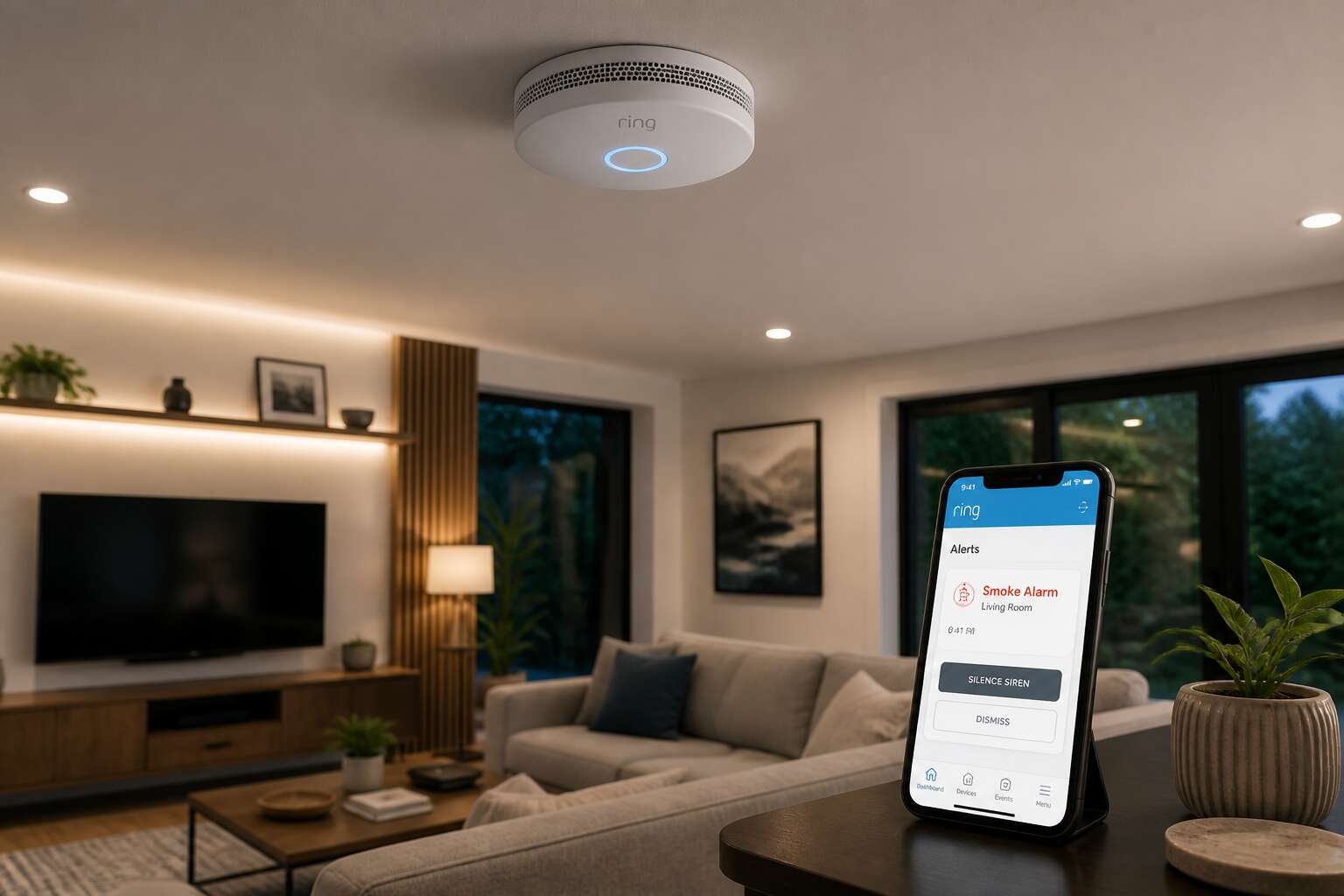
Demystifying the Ring Alarm’s Device Ecosystem
How Ring Alarm Communicates with Sensors
Ring’s alarm system is a network of sensors that communicate over Z-Wave and Wi-Fi. Each device performs a distinct function within the security setup. The question of which smoke detectors work with Ring is really a question of protocol support. Compatibility depends on the protocol a device uses, not the logo on the box.
The base station polls Z-Wave sensors continuously. Wi-Fi carries data to your router and the cloud. Encryption blocks interference from neighbouring systems, a real consideration in dense South African suburbs where many homes run security networks simultaneously! I have seen installations fail simply because a sensor sat outside the hub’s range.
Consider how each component joins the ecosystem:
- Z-Wave sensors pair directly to the base station and cannot join via Wi-Fi.
- Wi-Fi devices, such as doorbells and cameras, connect to your router separately.
- The Ring Alarm app blends all signals into a single security view.
The Role of the Base Station and Z-Wave Protocol
Understanding the Ring Alarm’s architecture begins with its central hub, a silent sentinel known as the base station. This device acts as the heart of the ecosystem, managing all local communication through the Z-Wave radio protocol. While your Wi-Fi network handles video from cameras, the base station speaks a different language to your sensors, creating a dedicated mesh network that remains functional even if your internet drops.
The magic of Z-Wave lies in its ability to extend range through each connected device. Every sensor acts as a repeater, passing signals from the far corners of a property back to the base station. However, this requires a physical presence within range of one another. For larger Johannesburg homes or sprawling Cape Town estates, the question of which smoke detectors work with ring often comes down to the placement of your existing Z-Wave nodes, not just the device brand.
The base station performs a triage of duties to keep your home secure:
– It polls Z-Wave sensors for status updates every few seconds.
– It maintains encryption keys for all paired devices.
– It triggers the siren when a sensor sends an alarm condition.
– It relays data to the cloud for app notifications.
Because the system relies on this protocol, a smoke detector must speak Z-Wave to join the security setup. Wi-Fi only detectors without Z-Wave compatibility will never appear in the Ring app, rendering them standalone units.
Distinguishing Smoke Detectors from Carbon Monoxide Sensors
I have watched more than one security panel misconfigured because someone assumed every life safety device is interchangeable. In the Ring Alarm ecosystem, a smoke detector and a carbon monoxide sensor perform different duties. Confusing them invites nuisance alarms or undetected danger!
Smoke detectors respond to visible combustion byproducts, the particulate matter rising from smouldering fabric. Carbon monoxide sensors track an asphyxiant, an odourless and invisible gas. When a Johannesburg homeowner asks which smoke detectors work with ring, the answer starts with identifying the actual threat.
- Smoke detectors trigger on particulate matter and heat
- CO sensors trigger on gas concentration over time
The Ring Alarm pairs each sensor type as an independent Z-Wave node with its own alarm condition. A combined unit exists, but demands deliberate placement. The question of which smoke detectors work with ring only becomes meaningful once the hazard is certified.
Native Ring-Approved Smoke Alarms Worth Considering
First Alert Z-Wave Smoke Detectors
A smoke alarm that sits silent when it matters is worse than no alarm at all. A false sense of security, you might say. For Johannesburg homeowners seeking to integrate detection with the Ring Alarm system, the First Alert Z-Wave series is the most straightforward answer to the recurring query of which smoke detectors work with ring. These units speak the Z-Wave language natively, meaning they join your network without a third party hub or a convoluted workaround.
The engineering is solid, but the manners are what impress. The 3120B model, for instance, communicates its status clearly to the Base Station, and the accompanying chime offers an immediate sonic reassurance during testing. Pairing is a deliberate, unhurried process. You will not find yourself wrestling with a temperamental app interface.
– Tamper resistance that respects a curious household.
– Battery monitoring that avoids the 2 AM low battery chirp.
– A form factor that does not offend the ceiling aesthetic.
When guests ask, and they inevitably do, you can explain that these devices are the dependable standard. For a growing number of Cape Town residences, these detectors remain the definitive response to which smoke detectors work with ring, providing a peace of mind that is both audible and verifiable.
Nest Protects and Their Ring Compatibility Limits
The recurring query of which smoke detectors work with ring gets a complicated answer when Nest Protect enters the room. Nest Protect detects both smoke and carbon monoxide using split-spectrum sensing, and its voice alerts are genuinely easy to understand. Yet it cannot join a Ring Alarm network. Nest built the device around Thread protocol, not the Z-Wave language the Base Station understands.
The two systems coexist physically. They do not communicate. Nest Protect reports to its own app, while Ring watches its own sensors. Johannesburg homeowners often discover this only after installing both and waiting for a single dashboard that never arrives.
Ring’s Own Smoke and CO Alarm Options
Ring’s own smoke and CO detection strategy is clever in its simplicity. The company does not build a traditional smoke detector at all. Instead, it offers the Ring Alarm Smoke and CO Listener, a small device that sits near your existing alarm and listens for the siren. When your old detector screams, the Listener hears it and pings your phone. No new wiring, no complicated install.
The Listener works with virtually any audible alarm, so the question of which smoke detectors work with Ring gets a simple answer. All of them, as long as they make enough noise. The device distinguishes smoke from carbon monoxide alarms, so you know what you are dealing with. That helps in Johannesburg, where older buildings might have mismatched detectors, and for renters who cannot replace hardware.
Ring sells the Listener as a standalone unit or bundled with a contact sensor. It listens for:
- Smoke alarm sirens
- Carbon monoxide alarm patterns
One gadget, two threats, zero ceiling holes.
Kidde Smart Detectors and Z-Wave Integration
Some homeowners prefer a more direct connection than a listener offers. These detectors wire into your smart home’s nervous system with Z-Wave integration, sending signals that bypass sound entirely. They become part of a unified network rather than a listening post. This matters when walls are thick or rooms are distant, where a siren might fade.
Kidde Smart Detectors stand among the native options. They communicate with the Ring Alarm base station through Z-Wave, raising the question of which smoke detectors work with Ring without needing a compromise. The answer is a system that speaks the same language. You receive a direct notification, not an interpretation of a sound. The sensor readings themselves trigger the alert.
Z-Wave integration creates a chain of command. Smoke triggers a response across connected devices, such as lights flashing in a hallway or the siren blaring through the home. This immediate reaction offers a measure of certainty, a fixed point in a chaotic moment. Each detector updates the house’s status, providing a clear picture of where the threat exists.
Exploring Z-Wave and Zigbee Pathways for Third-Party Devices
How Z-Wave Bridges the Gap for Older Models
When homeowners ask which smoke detectors work with ring, the answer often hinges on the wireless pathway rather than the brand itself. Z-Wave operates on a sub-GHz frequency that penetrates walls and appliances more effectively than Zigbee’s crowded 2.4 GHz band. This distinction matters for older detectors lacking native Ring compatibility but still supporting Z-Wave. A legacy sensor can join the network through the base station, which acts as a translator between the device and the Alarm system.
Zigbee offers its own mesh topology, yet Ring’s current architecture prioritises Z-Wave for third-party safety devices. A detector from a previous generation, one predating modern smart home standards, can still function reliably through a Z-Wave bridge. This pathway closes the interoperability gap without requiring a complete hardware replacement. Consider the practical factors:
– Signal range in dense South African homes
– Battery longevity on ageing units
– Firmware updates delivered over the air
These elements determine which smoke detectors work with ring in real-world conditions, regardless of the device’s age.
Zigbee Detectors and the Need for a Hub
Zigbee asks for a formal introduction before it will talk to Ring. Unlike its Z-Wave counterparts, a Zigbee smoke detector cannot broadcast directly into the Ring base station. Its 2.4 GHz signals must first pass through a dedicated translation hub that acts as a separate node in your home network.
That hub connects to your router, giving the detector a path to the Ring app. I find that many homeowners overlook this intermediary when researching which smoke detectors work with ring.
To bridge these protocols successfully, remember the necessary components:
- The Zigbee hub manages the detector’s sleep and wake cycles.
- The hub links to your local network via ethernet or Wi-Fi.
- The Ring system listens for the hub’s translated output.
This expands your options, but only through this intermediary. The stability of the hub dictates the reliability of the entire safety system.
Using Smart Home Hubs to Extend Ring’s Reach
When you step past the common Z-Wave companions, the question of which smoke detectors work with Ring often comes down to the hub you place between them. I prefer using a smart home hub that speaks both Z-Wave and Zigbee, because it can take a third party detector’s native signal and reshape it into something the Ring base station interprets clearly. That hub does the translating on its own processor, not through a distant server, and that matters when your router is struggling during evening use.
This pathway opens up your options in a few important ways:
- The hub synchronises the Zigbee detector sleep cycles while keeping the bridge visible to Ring.
- A wired ethernet backhaul on the hub survives Wi-Fi dropouts.
- Both protocols stay active on separate frequency bands, so a congested 2.4 GHz one doesn’t snarl its cousin.
When you sort out which smoke detectors work with Ring, treat that hub as the actual channel of truth. It adds a translation layer, but it also gives older sensors a non identical way to join newer cases. For South African homes dealing with rotating energy cuts, a hub connected by ethernet lets the alarm path stay intact even when mother Wi-Fi dips.
Understanding Approval Lists and Certification
Certification lists hold the practical answers. When you search which smoke detectors work with Ring, the approved device list on Ring’s own site is the first gate. But that list is narrower than technical reality. I have seen Z-Wave and Zigbee detectors join a system through a hub without ever appearing on Ring’s official paperwork.
This matters in South Africa, where importers bring detectors from multiple regions. A device certified for Europe or America may work here yet carry no local approval mark. That does not change radio behaviour. It changes your warranty and insurance position.
Certification verifies:
- Radio frequency compliance for local spectrum
- Interoperability with common controllers
- Alarm signalling response time
- Battery life under polling
When evaluating which smoke detectors work with Ring, treat the approval list as a baseline. Certification means the device passed controlled tests. The hub pathway shows whether it survives real home conditions.
The Future of Matter and Thread in Ring Compatibility
Z-Wave and Zigbee pathways are not interchangeable. Z-Wave talks directly to the Ring base station, while Zigbee relies on an intermediary hub. That distinction shapes which smoke detectors work with Ring today. Imported units often arrive with Z-Wave radios, making them the safer option for immediate pairing in South African homes.
Matter and Thread promise to dissolve these silos. They aim for a single standard where a Thread-enabled detector can join Ring without a proprietary bridge. Ring’s adoption remains unconfirmed, but the trajectory is clear.
- Matter covers the application layer
- Thread handles mesh transport
- Ring’s timeline is unannounced
For local buyers, the official approval list may broaden eventually. Meanwhile, the answer to which smoke detectors work with Ring stays tied to Z-Wave and hub-mediated Zigbee.
Step-by-Step Setup for Maximum Reliability
Wiring and Battery Configurations for New Installations
Secure the physical connection first. A loose neutral wire remains the most common cause of smart smoke detector unreliability, causing intermittent dropouts that mimic sensor failures. For a new installation, the sequence matters. First, isolate the circuit at the breaker. Connect the hot, neutral, and ground wires correctly, and never use a switched leg. Detectors must remain energised continuously.
Battery backups require equal attention. Lithium cells handle Z-Wave polling surges better than alkaline types. Confirm polarity markings and clean oxide film from contacts. A slight misalignment prevents the device from ever joining your network!
- Turn off main power and verify with a multimeter.
- Strip wires to manufacturer’s specified length.
- Insert batteries after wiring, not before.
- Secure base plate before pressing the detector into the twist-lock.
After mounting, the base station will query the device. Which smoke detectors work with ring ultimately depends on this physical integrity, as a poor ground or reversed polarity rejects the join request. Test the signal path twice before closing the junction box.
Adding the Detector to the Ring App
After the wiring passes inspection, I open the Ring app and navigate to Devices. Choose Add Device, then select Smoke Detector. The app asks you to wake the sensor, so press the test button until the LED blinks amber. Patience matters here!
- The base station broadcasts an invitation to join the Z-Wave mesh.
- The detector responds with its unique encryption key.
- Ring confirms the connection by sounding a short chirp.
This handshake reveals instantly which smoke detectors work with ring. A detector that ignores the invitation usually suffers from a weak signal or an incomplete pairing sequence. Keep your phone near the base station during setup, and let the app finish its firmware check before mounting the detector permanently. The process rarely takes more than two minutes.
Testing Alarm Annunciations and Phone Notifications
Once the handshake completes, I test alarm annunciations before mounting anything permanently! Press the detector’s test button and wait for the siren to sound through every linked Chime. Then check your phone. The Ring app should display the alert within seconds. This immediacy reveals which smoke detectors work with Ring under real conditions.
I run this test from each bedroom in the house, because a distant sensor might pair yet still broadcast a weak signal. Signal strength on the device details page offers a clear reading. If the notification lags, reposition the base station or add a Z-Wave repeater. The siren blast and the phone ping must arrive together for the system to earn your confidence.
Troubleshooting Common Integration Pitfalls
Addressing Dead Zones and Signal Interference
Most dead zones are installed by the homeowner. Even after confirming which smoke detectors work with Ring, poor placement cripples the system. Signal interference is the usual suspect. Z-Wave shares spectrum with Wi-Fi and Bluetooth, crowding the radio environment.
Dead zones appear where you least expect them. A base station in a hallway cupboard may lose contact with a detector in the far bedroom. The fix is rarely the detector. Reposition the base station, or add a Z-Wave repeater. Keep metal appliances out of the signal path.
- Pair the detector within two metres of the base station
- Relocate Wi-Fi routers away from the base station
When the alarm blares in the house but the app stays quiet, check the battery orientation. A subtle issue, but I have seen it more often than you would think. Which smoke detectors work with Ring matters, but so does whether the signal survives your walls.
Handling False Alarms and Sensitivity Settings
The true test of which smoke detectors work with Ring arrives at 3 a.m., when the alarm shrieks and nothing is burning. Most integration pitfalls surface as false alarms. In my experience, the culprit is usually the sensitivity setting. Approved detectors ship with default sensitivity tuned for open spaces. Install one near a geyser or in a narrow passage, and you get a nuisance alarm.
Sensitivity settings hide inside the Ring app, yet many users never adjust them. A detector that works flawlessly in a bedroom, even one listed among which smoke detectors work with Ring, becomes unreliable near the kitchen. Steam, cooking oil mist, and the high humidity of a South African summer trigger the optical sensor. Lowering sensitivity silences most false alarms without dulling real warnings.
Updating Firmware Across Devices
Firmware updates are the quiet culprit behind most integration failures. Many South African users assume a certified detector stays linked to Ring permanently. Both the base station and the detector run separate firmware versions that must align. An approved model can drop offline after an update. This hidden variable decides which smoke detectors work with Ring.
Z-Wave devices need firmware refreshed through a secondary hub, not the Ring app directly. The app shows device firmware status, but the detail is buried.
- Verify the base station firmware is current before adding the detector.
- Re-pair the detector if the app shows an unknown device after an update.
Updating firmware across devices requires patience. A detector that worked yesterday can vanish after a base station reboot. Do not assume hardware failure. Re-adding it resolves the issue once firmware versions match. Revisit the list of which smoke detectors work with Ring, check firmware notes first.
When to Seek Professional Installation Help
A silent failure is the most insidious kind. When a detector goes quiet, not in alarm, but in connection, it whispers a problem that surfaces only in the dead of night. The troubleshooting ritual often begins with the pair button, but the true culprit frequently lies in the sensor’s status report. A device that reports “unknown” in the Ring app after a recent reboot is not broken, it is merely out of sync with the network’s memory. Deleting the device and re-adding its Z-Wave signature often restores the invisible link that governs which smoke detectors work with Ring.
Before you resign yourself to a weekend of frustration, consider these steps to revive a silent connection:
– Check the battery type, as some Z-Wave detectors dislike lithium cells.
– Move the device within 10 meters of the base station during the re-pairing process.
– Perform a factory reset on the detector by holding the test button for fifteen seconds.
There comes a point when the digital tangle exceeds your patience. If the alarm activation fails to trigger the base station siren after three separate attempts, the issue is likely a radio frequency conflict, not a configuration error. This environment, laden with interference from other smart devices, requires a professional with a spectrum analyzer to diagnose. A certified installer also understands the nuances of South African electrical regulations, particularly when hardwired detectors are involved. They can ensure the backup battery is correctly seated and the wiring is not causing a ground loop that resets the device. While your insurance provider may accept any certified model, only a professional can guarantee that your specific installation achieves the level of safety required for the policy to remain valid. Sometimes, the peace of mind is worth the expense of a specialist who knows the full list detailing which smoke detectors work with Ring before they touch your ceiling.


0 Comments